Recent listening, current

Thursday, January 23, 2014

170-173. Four albums by Gigi Gryce Quintet and Gigi Gryce Orch-Tette, 1960-1961

This CD release by Fresh Sound collects the last four LPs by Gigi Gryce: Saying Somethin'; The Hap'nin's; The Rat Race Blues; and Reminiscin'. I think they were originally released on Jazzland, but I have to double-check. Gryce was respected and admired as an altoist and composer, and he is heard on a good many dates by other leaders. But he left performing and recording for the field of education... PS 53 in the Bronx, to be precise. In that regard, he reminds me of people like Nathan Davis, Donald Byrd, or Dave Van Kriedt who quit the scene to become educators. Sadly, Gryce's memory gets lost, because in an age of new ideas, he just kept on playing hard bop and never really made a big splash. What he didn't accomplish by comparison to his peers is irrelevant. As this set shows, Gryce made some excellent music. His effortless, sometimes abrasive lines and unique approach to the blues are rock solid. I know everyone's blues is unique but it's nice to hear a person say it his way. Likewise, Gryce's arrangements of "Summertime," "A Train," "Lover Man," and "Caravan" put a vivid new spark into the old warhorses. I'm thankful we have the recordings he left and if you haven't heard of him, then you now have a new musician to look into.

Tuesday, January 21, 2014

169. Ronnie Cuber / Live at the Blue Note (1986)

Live at the Blue Note is fine hard bop by a very strong quartet featuring Cuber on barisax, with Dr. Lonnie Smith on organ and the outspoken Randy Brecker on trumpet. Drums are by Ronnie Burrage. The lineup says it all. Brecker is outstanding, assertive and brassy but so is everyone else. Listeners will recognize Cuber and Smith as an old team. From behind the organ Dr. Smith gives the music a robust buoyancy, working the draw bars like floodgates. Along with Burrage, he bounces between playing his own steely choruses and pointed interplay with Brecker and Cuber. The date is memorable and stands head and shoulders above Cuber's studio dates on Projazz, like Two Brothers. The set is a mix of bop, rhythm, and blues. It gets pretty hot, as with "Philly Blues," or "Blue 'n' Boogie," but practically the whole disc has the same feel. If you can find a copy and the price is reasonable, buy it. The audio is great, too.

Monday, January 13, 2014

168. Miles Davis / Kind of Blue (1959)
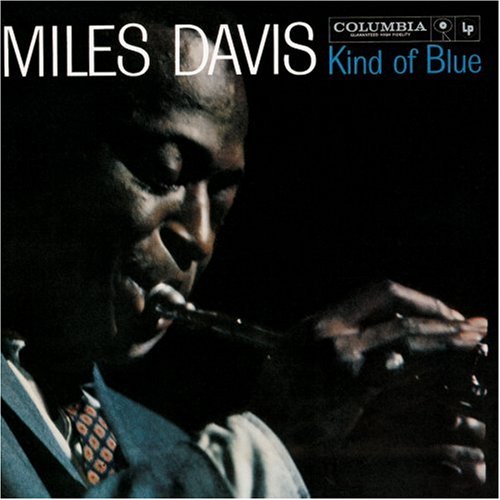
A review of Kind of Blue seems pointless. I'll muse for a few hundred words, and then quit. I imagine a world without this record, and that is a difficult world. It's a world where Bill Evans didn't sub for Wynton Kelly, a world in which countless musicians were struck by inspiration elsewhere. A world that is one milestone short of properly demarcating the future. A world where your brain is not irresistibly and without permission drawn to referencing all subsequent Miles Davis dates to this one. It's a world without the myth of it all being done in one take, a world where you don't have to buy that other CD to find out that what you missed was not really anything special. In this world, 1959 is not terribly different than 1958 or 1960. The Columbia vault is one cart of tapes lighter. It's a party that went one album different. It's the late night DJ who selects something by Cliff Brown instead. It's a world where the porter didn't see the CD on my passenger seat. It's a world where as a teenager, I didn't once stop my bicycle in the middle of an intersection to change the batteries of my headset. It's a world where my daughter was lulled into dreamland by someone else's trumpet, and awakened by someone who was not John Coltrane. It's a lot the same, but it's not the same, and I'd rather have it with Kind of Blue.

Monday, January 6, 2014

167. John Coltrane / Lush Life (1961)
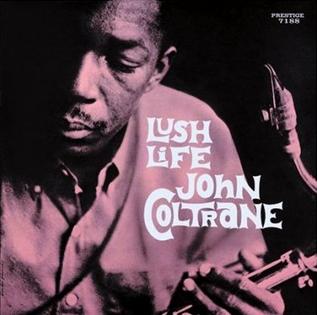
While Prestige's Lush Life was not released until 1961, it was recorded by Van Gelder during three sessions in '57 and '58. As he was no longer recording for the label, Coltrane had no say in it but ironically, the record contains a few of his choicest recordings playing in the small group, hard bop setting. This was an incredibly fertile period for Coltrane. He had yet to compose the seminal works that later appeared on Blue Note and Atlantic but was already working on the technique and musical ideas that would define his legacy. The first three tracks present Coltrane as leader of a pianoless trio, fleshing out a lot of chords in lieu of the keyboard. The most memorable moment on Lush Life is probably the title track, a luscious ballad owned by the leader until around nine minutes in when Donald Byrd steps out of the woodwork for some equally inspiring lines on the trumpet. Two years ago I was at a stoplight listening to this on the radio and was so transfixed by Byrd's meandering melancholy that it took a horn blast from the car behind me to break the reverie. While I'll never recreate that moment, I can still listen again and again. "Trane's Slo Blues" is also notable for Coltrane's moves inside the changes. These tracks appear on the boxset Fearless Leader although they are not presented in the same sequence as they are here, which is actually quite good. 

Friday, January 3, 2014

166. Sonny Rollins / Rollins Plays for Bird (1956)

The medley of post-1950 Charlie Parker tunes that begins this tribute to the late Mr. Parker flows as effortlessly as a river thanks to Wade Legge's piano continuo and Max Roach's drum kit. Rollins and Kenny Dorham do most of the melody and choruses, although Roach gets a fair shake, too. He characteristically mixes it up during the front line's choruses, laying on the cymbals and hard rolls while changing from straight time to double-time and back again, adding a loping feel, building urgency, or cooling it back down as needed. Legge and bassist George Morrow are the only musicians in the quintet to never work with Parker, so there is a familiar intimacy about the music that comes from the friends honoring a friend. Dorham is relaxed and outstanding in the "Star Eyes" segment. He especially soars in "Kids Know," a Rollins original in 3/4 that the band stretches out generously. There are a lot of Charlie Parker tribute albums out there, hundreds since 1955, and some are real time wasters. This date is one of the best, the most genuine, and the most enjoyable.

Wednesday, January 1, 2014

164. Ernie Watts Quartet / Ernie Watts Quartet (1987)

This self-titled LP featuring Watts as the chief soloist is pretty hard to fault. Watts' craft and professionalism are what's on display here, and they are impressive to say the least. Watts is a diversely talented musician capable of playing with ease in a dizzying assortment of styles and settings, and this album does well to demonstrate his chops on tenor, alto, and soprano saxes while playing pop, hard bop, and the blues. By 1987, he had done extensive session work in Los Angeles that refined his technique from a streetwise hard bop sound to the razor edge of instinct and technical facility required for more specific demands as a hired horn. Side 1 opens with "Language of the Heart," a smooth pop tune that never strays far from the melody. But the next track is a mean slice of hard bop called "Continental Blues." The dramatic juxtaposition of these styles proclaims YES, this man will do both! Here and elsewhere, Watts switches from heavy lines in a tough tone to effervescent double-time eruptions of verbosity that probe the harmonic architecture of the changes. Even when he's on alto, Watts reminds me a lot of John Coltrane. I appreciate the group's thoughtful rendition of "Body and Soul," which is dedicated to Mr. Coltrane, and at 6:02 is also the longest track on the record. Pat Coil, whether driving the rhythm, comping, or interplaying intelligently with Watts, wins the prize for underrated sideman of the hour. Often, in the more predictable spots, his piano maintains my interest when the melody from Watts just isn't enough. Timekeeping Leatherbarrow and Dibartolo are also notable.

Monday, December 30, 2013

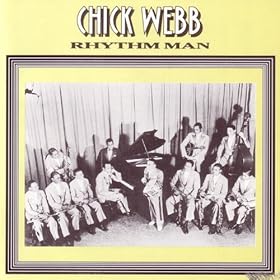
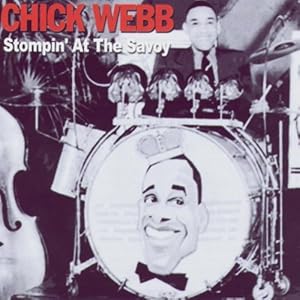
163-165. Chick Webb / Rhythm Man (HEP CD 1023) Stompin' at the Savoy (CD AJA 5416) & Stompin' at the Savoy (FABCD 119)

I've recently come across three similar compilations of the swing drummer and bandleader Chick Webb, who was affectionately known to his friends and admirers as "Little Man." Webb was a prominent leader on the '30s swing circuit, perhaps best known for introducing the world to Ella Fitzgerald who led the band following his death. Although short lived, Webb's orchestra was respectable and performed on par with the Ellington, Basie, Lunceford, Redman, and Henderson bands. Tragically, Webb died in 1939 so we don't know what kind of magical music he would have continued to make as the swing craze really took off.

All three records feature common selections in the playlists, all are released as public domain music by UK labels, but that's about where the similarities stop. If I could pick only one, I'd go with Rhythm Man. It has superior audio (transfers by John R.T. Davies), detailed liner notes including arranger credits and order of soloists, and two versions each of "Blue Minor" and "On the Sunny Side of the Street." If I could pick two of the three, then the ASV disc is the next clear winner. It has bright audio with excellent definition up top, but somewhat stingy in the low end. Like the Stompin' disc by Fab, it includes some later material not heard on the Hep release (hear "A-Tisket, A-Tasket"). Fab's Stompin' suffers from dismal and murky audio that sounds like gratuitous noise reduction, as well as some artificial reverb and overly loud levels. For all of its clarity and definition, the ASV's Stompin' sounds like it could be running a bit fast. Given, the difference in speed is only really apparent by listening to the two discs in contrast. Presently supplies are limited and ASV/Living Era imprint is defunct so better get on the stick if you'd like to own one today.

The following is a summary breakdown of each album, and should it interest you, I prepared a .PDF to download here which graphically compares the playlists of each album.

Rhythm Man  
Hep Records  
HEP CD 1023
Has a lot of earlier material, not included on either of the others. Excellent audio definition, transfers done by John R.T. Davies. Best liner notes and discographical information. Lacks later material, and there are no vocals by Fitzgerald. Two versions each of "Blue Minor" and "On the Sunny Side of the Street."
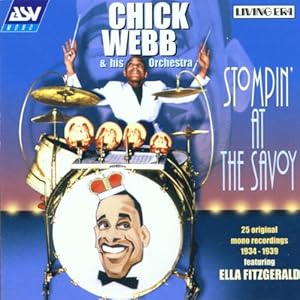


Stompin' at the Savoy
ASV/Living Era (imprint)
CD AJA 5416
Contains everything on FABCD 119 except five songs. Lacks earlier material found on HEP CD 1023. Good definition and clarity, however, sounds like maybe running fast. Lower end tends to lack body. Later recording of "Sunny Side" and "Blue Minor." Fitzgerald on "A-Tisket, A-Tasket." Out of print and limited availability. Pretty good liner notes.

     
Stompin' at the Savoy 
Fabulous
FABCD 119
Similar playlist as CD AJA 5416. Muddy sound lacks definition and high range possibly due to noise reduction. Is that artificial "concert hall" reverb that I hear? Boo! Speeds seem inconsistent - some too fast, others too slow. Levels are hotter than ASV, and a little less than Hep. Earlier recording of "Blue Minor." Limited liner notes and discographical information.


Thursday, December 26, 2013

162. Steely Dan / Countdown to Ecstasy (1973)
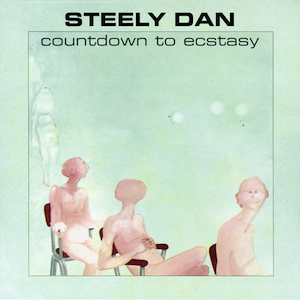
The followup to Can't Buy a Thrill is like the great early Steely Dan album that no one talks about. It's understandable for a band with things like Aja or Pretzel Logic lurking in the back catalog. Much like Scam, the band's second LP seems destined live in the shadow of its discographical neighbors. But the songcraft is wise and clever, a subtly sophisticated mix of pop, blues, rock, soul and jazz. And like Royal Scam and Katy Lied, it helps set up the stylistic direction that reached its pinnacle with Aja. I find it amazing that this is only their second record. It's an instructional antithesis to the sophomore slump. Appreciating its heights and evenness compared to the debut does much to illustrate the talents of the creators. To say the least, Becker and Fagen are really hitting their stride by this time. The pieces for each future masterwork are in place: First thing to gel is Fagen doing all the lead vocals, killing the herky-jerky transitions heard on Thrill. Denny Dias and Jeff Baxter split the guitar duties, Baxter contributing pedal steel and six string. But there are notable session players, too, like Ray Brown on "Razor Boy," Rick Derringer on "Showbiz Kids," Ernie Watts on "My Old School," and Victor Feldman playing several instruments through both sides. The lyrics come into their own, filled with wry references, quotable one-liners, and unforgettable character studies that are simultaneously explicit and oblique. Some of the music is visionary, too. "Pearl of the Quarter" has been described as "country," but to my ear it is something closer to the further amalgamation of American musical idioms, presaging that which in later decades we would come to call Americana. I love all the SD albums and go through phases where one will sit on my stereo for longer than the others. Right now, Ecstasy is "the one." So excuse me as I put on my headphones and turn on to the curt, sardonic strains of "Bodhisattva" once again....

Monday, December 23, 2013

161. Al Grey & Friends / Christmas Stockin' Stuffer (1990)

If you're not averse to "Christmas jazz" -- practically it's own genre nowadays, a diverse lot encompassing everything from Coltrane to Mindi Abair -- then be sure to track down a copy of Christmas Stockin' Stuffer. The mood is relaxed and bluesy, an enjoyable set replete with vocals, organ, guitar, and of course, Grey's talking trombone. I like its lonesome touch on "Winter Wonderland" and "It Came Upon a Midnight Clear," interspersed with Joe (son of Al) Cohn's funky riffing on the guitar. There are some vocal spots like the opening "Christmas Stockin' Stuffer" (guest vocal by Jon Hendricks), which is a treat. "White Christmas" is arranged with strings adding a warm, homey glow to the playlist. The short but sweet New Orleans inspired "Auld Lang Syne" plays you straight through New Years' Eve, if you can't give up the holiday spirit until January. Not exactly what I would describe as an obscure album, but not exactly easy to find, either, Grey's holiday outing is a must-have for my season.

Friday, December 20, 2013

160. Duke Ellington & Johnny Hodges / Side By Side (1959)

I put this album in the "essential" pile. From the first punchy, rather Dukelike chords in "Stompy Jones," we're off to the races with two sessions comprised of Ellington and Basie alumni. I love listening to Sweets Edison in the context of a small group. His lines in "Stompy" are clean, concise, and eloquent, ringing out above the swinging bass, Jo Jones' crashing cymbals and Duke's rhythmical encouragement. Those two guys -- Duke Ellington and Jo Jones -- make quite the pair midway through the tune when the front line lays out and lets them have a round of aggressive chords and crashing percussion. Hodges comes back just in time for a joyous, New Orleans style melee at the end. The lineup with Ellington and Sweets only does three of the album's nine tracks ("Stompy," "Squeeze Me" and "Going Up"). The second session is a septet recorded six months earlier with Billy Strayhorn, Ben Webster, Roy Eldridge, Wendell Marshall, and Lawrence Brown. The character is similar but the different chemistry is easy to hear. Of course the soloists change, Eldridge's style is flashier than Sweets', but there's also a different sentimental quality and certain reserve presiding over cuts like "Let's Fall in Love" that is absent from the music with Ellington. Maybe it's Webster. Or maybe it's Strayhorn? Who knows. Regardless of which band you prefer, this disc is wonderful.

Thursday, December 12, 2013

159. Buck Hill Quartet / This is Buck Hill (1978)

This is Buck Hill is Hill's recording debut on SteepleChase. From Washington D.C., Hill worked for the post office by day and was a hard driving driving tenor sax leader by night. So by the time we meet him in 1978, he is 51 years old and already possesses a fully developed tone and unique stylistic approach to modal material. Because of this late exposure, he is easy to miss, but he was and continues to be a fantastic player in the tradition of other big tenors that jazz listeners are more familiar with. For the debut he teams up with Billy Hart, Kenny Barron, and Buster Williams. They have a good sound that approaches the Prestige or Blue Note gold standard from two decades earlier. This session lacks the production gloss of newer Hill releases like Relax (which is also excellent). Notably, four of the album's seven tracks are Hill's originals. These are modal explorations with contributions from all members of the group. The four musicians play so well together that it's a hard sell for me to believe they weren't working together a lot longer than they were! Finding the vinyl could be a challenge but the recent CD is a worthwhile purchase and comes with a bonus take of Hill's "S.M.Y."

Tuesday, December 10, 2013

158. Dick Hyman & Ralph Sutton (1993)
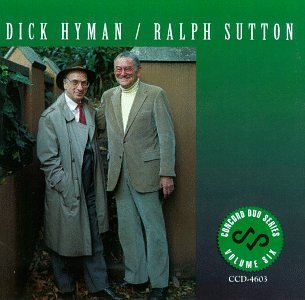
This magical live set was recorded at Berkeley's Maybeck Recital Hall in 1993. Both players have a grand command of the keyboard, and a little bit like the piano recordings of Duke Ellington, they render the music with the arranger's ear for an orchestra. Hyman is off to the left, Sutton on the right. Hearing the two styles in opposition is a marvelous thing. Tumbling down the stairs in effervescent flurries from the high end is Hyman, while Sutton provides a canvas of chording and big rhythmic anchor. Sutton's choruses in tunes like "I'm Gonna Sit Right Down and Write Myself a Letter" are comparatively rowdy, bordering on barrel house, filled with booming chords and a topsy-turvy swing. Clocking in just shy of five minutes, I think the tune could easily have gone another round, but what we get is such a skyrocket that it's impossible to complain. "Everything Happens to Me" is a solo feature for Sutton, while Hyman gets "Ol' Man River" all to himself. In the latter, Hyman's lines demonstrate a dazzling fluency in blues, bop, and balladry. A shimmering collection of piano jazz by two undisputed masters of the instrument, I highly recommend this collection.

Monday, December 9, 2013

157. Gene Harris Quartet with Frank Wess / It's the Real Soul (1995)

Recorded live across two nights in March of 1995, these eight tracks feature the Gene Harris Quartet (Ron Eschete, g; Luther Hughes, b; Paul Humphrey, d) in the company of Frank Wess. Wess divides his time between four tracks, playing tenor on "Menage a Bleu" and "Estoril Soul," then flute on "Straight No Chaser" and "My Funny Valentine." He is as expressive on the flute as Harris is on the piano, unleashing a diverse assortment of perky phrases and exciting techniques that frame the Monk tune in a perfectly jaunty way, and adding lots of personality to "My Funny Valentine." Nice as it is to have him around for the proceedings, the core band plays with such a big sound and heavy swing that I don't miss him on the other half of the record. Harris works well with guitarist Eschete. Their cooperation in splitting the breaks of "Lady Be Good" turns the old tune into a memorable affair, their choruses developing patiently until the mood reaches a fever pitch. "That's All," which is the last tune on the album, is a fitting closer. Harris teases "Rhapsody in Blue" before really pounding into fully chorded statements, with the crowd loving it. His style on the keyboard is often described as being rooted in a gospel tradition and tracks like "You Don't Know Me" clearly substantiate those descriptions.  

Saturday, December 7, 2013

156. Chet Baker / The Italian Sessions (1962)

Baker's groups in Europe were a mixed lot. Sometimes they were great but sometimes it was just the opposite. Then after a lifetime of drugs, alcohol, and legal trouble, his tone and technique suffered hugely.  I like this disc because it is none of those things. It features Baker on the front line of a charging hard bop sextet. He holds his own flanked by piano, tenor sax, and guitar. His lines are so forthright and aggressive, so strident and even verbose (for Baker) that it hardly even sounds like him. I'm dying to put it in a blindfold test because it's such a curveball. The high spirited band gets started on the first track. "Well You Needn't" is one of two rhythmically thorny pieces in the session, the other being Charlie Parker's "Barbados." In the Monk tune, Baker careens along filling the space above and below him with a clarion tone and fast but thoughtful flits into the upper register. The drummer, Daniel Humair, drives the thing right over the top. Every track is short and concise -- no wasted space, no excessive showboating, no lost attention or bad takes. If you know the Let's Get Lost Chet Baker, the Californian bebop sensibility, the underplayed moody ballads and minimalistic statements in the lower register only, then you could revise that understanding, or at least enrich it, with these eight performances. They even do "Star Eyes," which is one of my favorite tunes by anyone.

Friday, December 6, 2013

155. Earl Bostic / Flamingo (2002)

Flamingo is a double disc compilation by the UK's Proper Records label, covering 1944 to 1951. The audio quality is very good. These groups are like many of the transitional orchestras of the 40s and early 50s. They feature veterans alongside torchbearers from swing to bop and beyond. In the early sides, we hear Bostic with Rex Harris, Cozy Cole, Don Byas, Tiny Grimes, and Lionel Hampton. Later, in his stripped down R&B orchestra, we hear a sampling of Jimmy Cobb, Wilbur Campbell, and Jaki Byard. Listen for the transition from gut busting alto to what became Bostic's trademark technique. In the 1949 sextet, tracks like "Filibuster" show repeated riffing with huge tone, but also a nimble fingered aptitude for clean, double-time runs through the scales, colored here and there with reed buzz. The lovely "Serenade" (Gene Redd on vibes) has a similar feel. Like Ben Webster, Bostic could play with arresting power, or sublime gentleness. "Flamingo," probably his best known track, has become the archetypal rendition, although it isn't much different in structure or appeal than other sides recorded by the group. I like the later sides best, but the early ones are priceless, too. 

Tuesday, December 3, 2013

154. Gene Ammons and Sonny Stitt / Boss Tenors (1961)

If you've got the stereo disc then Ammons is in the right channel and usually goes first. Stitt is in the left channel and comes next, occasionally doubling on alto. The latter was one of the most inspiring alto players there was, but he gets short shrift. A whiz on the alto, he was equally capable on tenor or even baritone (no barisax on this disc). These two players make wonderful music together. It's a solid dance session, with plenty of fireworks and some intriguing knots in the choruses that may interest more serious listeners. "There is No Greater Love" features Stitt on alto. His exhilirating double-time chourses are a thing to marvel at. While trading jabs with each other, the horns take unexpected sidesteps outside the blues, like in Ammons' first chorus of "Autumn Leaves," or some of Stitt's phrases in the smoking "Blues Up and Down." The rhythm section of John Houston, Buster Williams, and George Brown has a good chemistry. Williams' timekeeping meshes well with Brown, and especially Houston's comping style, which favors chunky, chorded statements emphasizing the beat. Their interplay with the leaders during "Blues Up and Down" really kicks the tune into a higher gear. This is a memorable session, and quite enjoyable, to say the least.

Saturday, November 23, 2013

153. Miles Davis / Big Fun (1974)

Listening to Miles go electric 40 years ago, critics were in a different position. They took issue with his stylistic developments, because 1974 was much different than 1954. They were too close to see that the intervening years would witness Davis' massive influence on successive generations. Today we see what happened, so we evaluate their merits on another scale. It bears mentioning that these aren't records I can listen to every day. I don't have that kind of time to invest on a daily basis. Like Bitches Brew, the music on Big Fun explores modality through orchestration and arrangement. The tracks are brimming with textures, melodic ideas, and moods. Themes are played and repeated, then recalled, then played again. The effect is haunting, like beasts looming in a fog, vanishing and reappearing. After 22 mnutes, the effect is glacial. Like it says in the liner to Coltrane's Ascension, you shouldn't turn it on without expecting to hear at least a whole side. You can't be interrupted for a few minutes without the magic being broken, and the arc is lost with just a few minutes of play time. Collaborations with Zawinul like "Recollections" or "Great Expectations" fulfill the promise, and typify what's found elsewhere throughout the record. As if you really need a curveball, Davis added sitar and tabla.


Thursday, November 21, 2013

152. Tom Principato / Smokin' (1985)
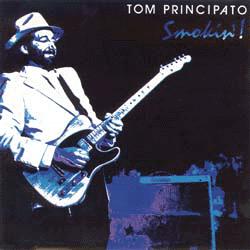
Principato is well known on the East Coast circuit. In the 70s, he made a pair of legendary albums with fellow Tele-wizard Danny Gatton (Blazing Telecasters and More Blazing Telecasters). But outside of the South, his name is more obscure. Principato's nimble, string bending, Fender-driven brand of electric blues combines a stripped down Chcago style with Texas and Southern flavors. Like the discs he did with Gatton (and much of Gatton's work, Tom or no), it draws from all over the blues tradition, a swirling cocktail of jump, boogie, rock, country, and swing. There's a tinge of honky tonk and each lick is rendered with gratuitous twang. Principato's sustain on sweeping string bends gives each note its own zip code. Smokin' is the perfect title. The album cooks on high from the first note until the last. For verse sections, Principato plays riffs close to the nut in a deep, growly sound. He soon flies up the neck in a combination of slick, fluid phrases that are interspersed with chunky bends and exciting slides. "Lipstick, Powder & Paint" continues the twangy blues vibe, likewise "Fish Fry." Harder rocking tracks include Principato's "Talkin' Trash" and the closing "Hard Livin'." Fans of Stevie Ray or any of the usual suspects will find this to be an infectious delight. Be warned: buying one album may lead to buying three or four more...

Tuesday, November 19, 2013

151. Hank Mobley / Workout (1961)
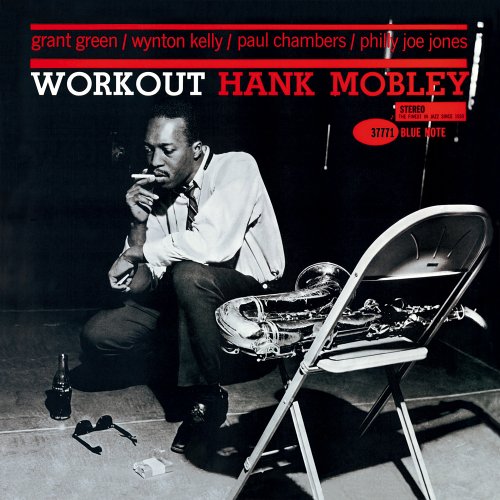
The band is Mobley with Wynton Kelly, Paul Chambers, and Philly Joe Jones playing typically of the period. I can't help but feel that Mobley is underrated as a composer and stylist, though. He's in that club with George Coleman and a few others, seemingly overshadowed by the giants they came up with. There's a lot of blues on this record, dotted here and there with elastic phrases and effervescent flurries by Mobley. Four of the six tunes are Mobley's originals, the exceptions being "The Best Things in Life are Free" and "Three Coins in the Fountain." They're interesting covers, one being rather old and the other an oddball. I like Mobley's melodic inventions and improvised embellishments of the melody. His colorful palette combined with a hard charging, muscular sound occasionally reminds me of Dexter Gordon. In the rhythm section, Jones and Chambers keep the soloists busy by mixing up the tempo, Jones occasionally very aggressive with crashes and rolls, playing melodically, not just rhythmically. Green and Kelly often solo in that order. Green has no trouble in the bebop idiom, spinning single-note solos like a bluesy sax. You can't go wrong with this or Another Workout, but for Mobley beginners, I'd start with Soul Station.

Monday, November 18, 2013

150. Wayne Shorter / Juju (1964)

Shorter's second LP for Blue Note finds him branching out as a composer and even experimenting with a different sound from his reed. There's no Lee Morgan in this group, but the rest is the same as on Night Dreamer. On the opening "Juju" he uses a harsher tone and plays stretchy, contemplative phrases that explore his interpretation of a chant-like African melody through the repetition of its few tonalities. The rhythm section pins down the whole thing, and often with Shorter sketching and resketching the vaguest of melodic ideas, it's Reggie Workman and McCoy Tyner who indicate where the melody actually is. In a word, spooky. Elvin Jones gets behind it (seemingly several times at once) and it works. The group's dynamic for much of the album is the same as it was with Coltrane's band, and it's instructional to listen to Juju's tracks mixed at random with Coltrane's Live at the Village Vanguard. Try that and tell me what you think. The fabled Workman-Tyner-Jones unit is like one animal, it has one sound, and it's a very distinctive one. Then you've got the tenor on top of that, either the master or his understudy, and either way it's magic. Like Night Dreamer before it, Juju clearly originates in blues and bop, but turn around and you'll find that shoreline quickly vanishing behind you.

Friday, November 15, 2013

149. Cannonball Adderley Quintet in Chicago (1959)
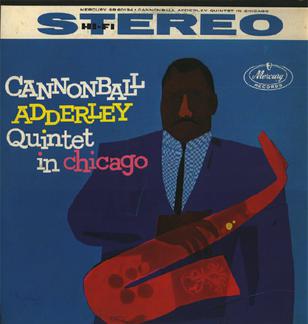
Cannonball Adderley Quintet in Chicago (aka Cannonball & Coltrane on Limelight LS 86009) is a splendid disc from the core band that recorded Kind of Blue. "Limehouse Blues" stands ragtime roots on their head in the attitude of hard bop. A sparring match between alto and tenor proceeds at breathtaking pace until the tune reels in for a final, punctual tutti on the main theme. "Stars Fell on Alabama" is next and features very sensitive embellishments from Adderley. Kelly goes next, tinkling single notes into the dusty register. As saxes go, it's a pleasure to hear the two styles in opposition. Adderley and Coltrane ride atop the rhythmic swell and strike the bar at will. But the two players are not very similar. Contrast their rhythmic interpretations of "Wabash," or technique in "Grand Central," which crackles with Trane's rhythmic inventions in fast triplets. The ballad "You're a Weaver of Dreams" is handed to Coltrane, and Kelly strolls through some jaunty figures that recall the old school with aplomb. On each track, whether it's Adderley busting open the guts of the melody and improvising endlessly thoughtful variations on its theme, or Coltrane boldly probing the rhythmic and harmonic architecture, there's always something to hang an ear on. This disc is a fine compliment to Kind of Blue, Somethin' Else, and At Newport 1958.

Thursday, November 14, 2013

148. Fenton Robinson / Somebody Loan Me a Dime (1974)

I like this debut for Alligator a lot because Robinson's guitar and vocals combine much of what I love about Texas, Chicago, jazz, and soul all in one place. It has a pureness, a genuine flavor that is unmistakable, yet it is not adequately described by any one of those styles. It all starts with the vocals and guitar which are backed by a straight ahead band including Bill Heid and Mighty Joe Young. Robinson's voice is a deep baritone, capable of rich emotional detail while its timbre is smooth enough to imply a dimension of gentleness. This distinguishes him from the haughty, barkingly self-assured styles of singers like Muddy Waters and Howlin' Wolf (just saying). And it's a big voice, too. They needed a microphone for the sessions but it's easy to see him singing without one. For "mikeless" cred, he even covers Big Joe Williams' "You Say You're Leaving," and to devastating effect. His unique blues guitar style is evident from the first track, "Somebody Loan Me a Dime." Robinson plays smart licks in a call-and-response style, but draws jazzy patterns from a more colorful pallet than your typical player. The tone is dirty and overdriven, without reverb, and sounds pretty much right from the wire. This is essential for fans of Chicago or Texas blues because it's good for character, and an easy like for fans of Grant Green or anyone with a penchant for soul jazz.

Thursday, November 7, 2013

147. Either/Orchestra / The Calculus of Pleasure (1992)
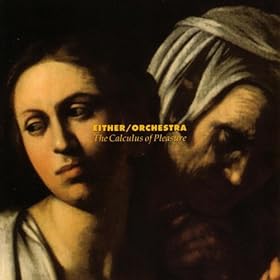
Like everything by Either/Orchestra, The Calculus of Pleasure intrigues me. Music by Benny Golson ("Whisper Not"), Horace Silver ("Ecaron"), and Julius Hemphill ("The Hard Blues") bumps against the original work of Bob Nieske ("Consenting Adults," "Grey"), Russ Gershon ("Bennie Moten's Weird Nightmare," "Miles Away"), and Curtis Hasselbring ("Unnatural Pastime"). I love the classic vibe and musical conversations in "Consenting Adults." Nieske then produces a shy ballad in "Grey" that whispers the secrets of its harmonic language more with each successive listen. Gershon's tunes are varied, like "Miles Away," the down tempo, texture-laden tribute to late Miles Davis, or the curious intersections of "Nightingale". In spite of its obviously spirited playing and conception, the whole of Calculus seems restrained and lacks some of the devilishly odd character that endeared me to Half-Life of Desire. The music has held up extremely well in the nearly 25 years since it was recorded. I see this as a rumination in sound rather than a wholesale defection from the grinning muse that inspired Half-Life. As always, E/O's trademark of mixing old with new, enhanced by each member's indelible stamp, creates a codex pointing in several directions simultaneously.

Wednesday, November 6, 2013

146. Wes Montgomery / Smokin' at the Half Note (1965)

Smokin' is the second collaboration between Montgomery and the Wynton Kelly Trio. They played on a couple of his other albums, too, and they make a solid group. The trio is Kelly, Chambers and Cobb. Having said as much I shouldn't have to say more because the names, let alone the music, practically say it all. I'll listen to anything with these guys. Only two of the five tracks on the original LP are actually live from the venue, "If You Could See Mee Now" and "No Blues." The other three are from (where else?) Van Gelder's studio. It doesn't really matter because both dates are terrific. Our opener "No Blues" pushes 13 minutes in length, marked by Montgomery's fat tone and heavy right hand. It's also an interesting piece as far as Miles covers go, dating from his 'casting around' period before the second great quintet formed up. But getting back to Wes, his melodic constructions in "Unit Seven" are something to marvel at. It's refreshingly cogent jazz thinking, replete with strong musicality and inventive spirit. For both live and studio material, Chambers and Cobb are the bedrock while Kelly is probably the perfect pianist for this group, having both the technical facility and bluesy swagger necessary to enhance the brew. If you want to learn what jazz guitar is all about, this is a good entry point.

Monday, November 4, 2013

145. Benny Carter & His Orchestra / Further Definitions (1961)

This octet features the alto saxes of Green and Phil Woods playing across from Coleman Hawkins and Charlie Rouse on tenor. The lineup recreates the famous Green-Hawkins date from Paris 1937 while harkening back to the swing era's "dueling" sax lineups, fashioned after the Basie model. This time, several 30+ year veterans team up with players of the next generation like Woods, Rouse, and Jimmy Garrison. It's a real sympatico affair, a collage of distinctive voices working together in a shared, now classic style. Their danceable, infectious small group swing is a far cry from Impulse's stock and trade just a few years later. Carter's arrangements provide amply for the players, and the set rolls without a hitch. I love "Body and Soul," especially when Hawk plays it. It's a gem, and Carter's chart gives him all the room he wants. Woods' work on "Crazy Rhythm" (a chestnut also from the Paris date) is notable, drawing equally from the work of his mentors and his own developing style. The solid, self-assured vibe feels a lot like Duke Ellington Meets Coleman Hawkins or Verve's Ben Webster and Associates. Comparisons aside, it's something you want to own for its sheer enjoyability, if not for its historical value.

Tuesday, October 22, 2013

144. Yma Sumac / Voice of the Xtabay (1950)

Xtabay is the Peruvian soprano's famous American debut. Its release was in 1950 when she signed to Capitol and began thrilling audiences with an astonishing range of nearly five octaves. The songs were composed and arranged by Les Baxter along with husband Moises Vivanco, and John Rose. Exotica aficionados will appreciate the presence of Baxter but Vivanco actually gets most of the credits. Some of these tracks, or at least snippets of them, have appeared in advertising campaigns and movie soundtracks, so there could be many listeners who are familiar with the voice but unaware of who it is. Selections combine catchy snatches and "exotic" percussion with lush jazz instrumentation and strains of Peruvian folk music. Some songs are haunting and ethereal ("Virgin of the Sun God"), some are delightfully quirky ("Monos"), and all feature Sumac's captivating voice. She doesn't just sing, either, but breathes, chants, yelps, croons, and shouts. It's invigorating! If you're new to this vocalist, then you could get one of those greatest hits compilations, but you'd do just as well to start here, and it's a very nice item for the shelf.

Saturday, October 19, 2013

143. Don Braden / The Voice of the Saxophone (1997)

Braden plays a big sounding  tenor and does an admirable job arranging for his octet (which is occasionally a quartet, as with "After the Rain"). He carries most of the groove but there's also Vincent Herring, Randy Brecker, Frank Lacy and Hamiett Bluiett. The arrangements are nimble, often carried by a piano continuo, and they balance the group's massed power with spaces that feature the soloists. It's clever, and I'll forget that I'm listening to an octet before a big blast reminds me to count the pieces. The opener is Hank Mobley's swinging "Soul Station." There's a lot of good hard bop in the playlist, like Shorter's "See No Evil," or Jimmy Heath's "Voice of the Saxophone." It all sounds fresh. There's also Sam Rivers' tricky "Point of Many Returns" and some solid originals by Braden like "The Dust Kicker" and "Cozy," (nice solo by Brecker here). "Monk's Hat," which is the tune we all know as the theme from the Cosby Show, is appreciated but might be more appropriately placed at the end of the album. Kitsch aside, I like that last one well enough because it reminds me of watching Cosby! Hats off to Braden and crew for an outing that's enjoyable, danceable, and even holds a few surprises.

Thursday, October 3, 2013

142. Miles Davis / Miles Ahead (1957)

This album is the natural progression out of the Miles Davis Nonet style that was documented on The Complete Birth of the Cool. Davis and Evans deliver on the promise with a new band almost double in size. Davis is the only soloist, playing flugelhorn instead of trumpet. Evans is composer and arranger. The sound of the orchestra is lush and slick, clear evidence of the project's bigger budget. Evans' arrangements elegantly capitalize on the power of the massed pieces, and with Davis on the flugelhorn, there's a stately majesty at play. The playlist is arranged like one continuous performance (see Such Sweet Thunder by Duke Ellington). I love the way all the moods melt into one another, contrasting against a greater arc of musical story. The Spanish tinge of "Maids of Cadiz," for example, or the hard swinging "New Rhumba" (Ahmad Jamal) that explodes from "Blues for Pablo." It's magic, and essential listening for all jazz fans. No excuses!