Recent listening, current
Archived listening, 2013-2016
Showing posts with label tenor sax. Show all posts
Saturday, January 2, 2016
209. Lionel Hampton & Stan Getz / Hamp & Getz (1955)
I suppose it's nice that by a happy accident of geography and scheduling, Hamp and Getz occupied the same place at the same time and afforded us a record. Hamp hits the sticks with a swinging ferocity that inspires Getz out of his cool cage in some unexpected chances. The pair battles through choruses and plods through a medley of ballads in a fair exposition of each's technique. It seems that Getz had to start running to keep up with the manic energy of the legendary vibraphonist. The two personalities make something of a strange cocktail, and I'd say the net result is more differentiated and less of a mutual product. The most exciting fireworks come during uptempo "Cherokee" and "Jumpin' at the Woodside." On the CD reissue, we have some extras, namely a mystery trombone player rumored to be Willie Ruff, but he doesn't really do much. The outtake of "Gladys" is a nice party favor, but, again, nothing special aside from where Hamp hits a clanger. I never like it when a reviewer describes something as "nonessential" but that's exactly what I've got here. The ingredients are enjoyable, but I'll continue taking my Hamp and Getz neat. The fine artwork on the cover is by the great David Stone Martin, reminding me that one of these days I'd like find a lithograph.
Labels:
1955,
bebop,
bop,
hamp and getz,
quartet,
quintet,
swing,
tenor,
tenor sax,
tenor saxophone,
verve,
vibes,
vibraphone
Wednesday, July 15, 2015
207. Stan Getz / Captain Marvel (1972)
Here, we find Getz in good form alongside the boys from Return to Forever. His own notes tell us it was Chick Corea who arranged the date, and most of the music is from his pen. But it is the tenor man from another era who craftily renders the smoothly stated leads that flavor the proceedings -- Stan Getz. He's a melodic monster, and a little like Zoot Sims, just can't seem to put a note wrong. At this point in his career, Getz's tone and the agility of his fingers were still intact, and his technique even thriving. So I hear the overlay of the players' contexts and their respective styles as the key to the session, with Getz relinquishing little of his modern cred, leaving the Corea contingent to provide the updated message. Remember, in 1972, Return to Forever was still newly formed. Miles Davis was active, the impact of fusion was unseen, and it was all still very fresh. Appreciate this disc for its personnel pairings as much as for its place in the later Getz canon. And it's got Tony Williams, reason enough for me to plop down for a listen.
Sunday, June 21, 2015
205. Coleman Hawkins with Eddie "Lockjaw" Davis / Night Hawk (1960)
Enough has been said about Hawk's invention of the wheel when it comes to the tenor sax solo. His influence extends over both horizons and has touched untold numbers of musicians both directly and indirectly. But his work, especially that of the transitional 50's and early 60's, is also a lot of fun to listen to. Hawk's professionalism was so cool it was casual, his technique an enigmatic balance of technical innovation and instinct. Here, in a 1960 session for the Swingville imprint and recorded by Rudy Van Gelder, he is heard with fellow tenor Eddie Davis, Tommy Flanagan, Ron Carter, and Gus Johnson. The title track, 10 minutes of slow blues loosely organized around a theme, is a pickup number that demonstrates the players' knack for the above. The contrast between the tone and styles of Hawkins and Davis on tracks like "In a Mellow Tone" provides an added dimension. Flanagan is in top form playing tastefully between the leads, Carter and Johnson a sympathetic unit whose attention to the music goes beyond timekeeping. As with Duke Ellington Meets Coleman Hawkins recorded for Impulse two years later, a good result from such a meeting of the minds was not a foregone conclusion, but in both cases the outcome was memorable.Saturday, June 20, 2015
204. Don Cherry / Art Deco (1988)
Credited to Cherry, this session belongs to the same unit that worked together before Cherry, Haden, and Higgins historically joined ranks with Ornette Coleman. It's a beautiful straight set, comprised of cooly executed standards, originals, and several Coleman covers. The quartet is familiar and tight. I haven't listened to much of James Clay's past work, but now I wish I had more of it on hand to explore. His deep, supple lines in "Body and Soul" put a fresh coat on the old song, mixing wry bop phrasing with bursts of unexpected tonal color and bluesy swagger. Cherry takes a rest while Higgins and Haden nimbly sidestep one another before Haden builds a short solo. The ensemble picks up again behind Clay's last chorus and the plaintively emotive outro for solo tenor. Monk's "Bemsha Swing" comes next, where Cherry and Clay get most of the spots, but leave room for Higgins. Higgins, Cherry, and Haden each get time alone on "Passing," "Maffy," and "Folk Medley," quiet, introspective spaces that give listeners a chance to appreciate their individualism. Eight-bars-and-blow gets old, I agree, but these renderings sagely belie that trope with wit, spirit, and a genuine enjoyment for the music Do you love great jazz? Find it, buy it.
Monday, January 6, 2014
167. John Coltrane / Lush Life (1961)
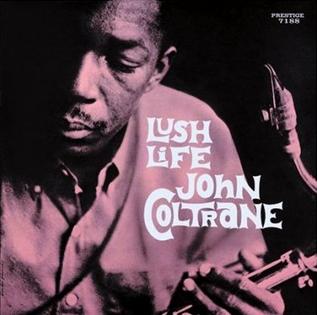
While Prestige's Lush Life was not released until 1961, it was recorded by Van Gelder during three sessions in '57 and '58. As he was no longer recording for the label, Coltrane had no say in it but ironically, the record contains a few of his choicest recordings playing in the small group, hard bop setting. This was an incredibly fertile period for Coltrane. He had yet to compose the seminal works that later appeared on Blue Note and Atlantic but was already working on the technique and musical ideas that would define his legacy. The first three tracks present Coltrane as leader of a pianoless trio, fleshing out a lot of chords in lieu of the keyboard. The most memorable moment on Lush Life is probably the title track, a luscious ballad owned by the leader until around nine minutes in when Donald Byrd steps out of the woodwork for some equally inspiring lines on the trumpet. Two years ago I was at a stoplight listening to this on the radio and was so transfixed by Byrd's meandering melancholy that it took a horn blast from the car behind me to break the reverie. While I'll never recreate that moment, I can still listen again and again. "Trane's Slo Blues" is also notable for Coltrane's moves inside the changes. These tracks appear on the boxset Fearless Leader although they are not presented in the same sequence as they are here, which is actually quite good.
Labels:
1957,
1958,
1961,
albert heath,
art garland,
art taylor,
donald byrd,
earl may,
hard bop,
john coltrane,
louis hayes,
lush life,
paul chambers,
prestige,
quintet,
tenor,
tenor sax,
tenor saxophone,
trio,
trumpet
Wednesday, January 1, 2014
164. Ernie Watts Quartet / Ernie Watts Quartet (1987)
This self-titled LP featuring Watts as the chief soloist is pretty hard to fault. Watts' craft and professionalism are what's on display here, and they are impressive to say the least. Watts is a diversely talented musician capable of playing with ease in a dizzying assortment of styles and settings, and this album does well to demonstrate his chops on tenor, alto, and soprano saxes while playing pop, hard bop, and the blues. By 1987, he had done extensive session work in Los Angeles that refined his technique from a streetwise hard bop sound to the razor edge of instinct and technical facility required for more specific demands as a hired horn. Side 1 opens with "Language of the Heart," a smooth pop tune that never strays far from the melody. But the next track is a mean slice of hard bop called "Continental Blues." The dramatic juxtaposition of these styles proclaims YES, this man will do both! Here and elsewhere, Watts switches from heavy lines in a tough tone to effervescent double-time eruptions of verbosity that probe the harmonic architecture of the changes. Even when he's on alto, Watts reminds me a lot of John Coltrane. I appreciate the group's thoughtful rendition of "Body and Soul," which is dedicated to Mr. Coltrane, and at 6:02 is also the longest track on the record. Pat Coil, whether driving the rhythm, comping, or interplaying intelligently with Watts, wins the prize for underrated sideman of the hour. Often, in the more predictable spots, his piano maintains my interest when the melody from Watts just isn't enough. Timekeeping Leatherbarrow and Dibartolo are also notable.
Monday, December 9, 2013
157. Gene Harris Quartet with Frank Wess / It's the Real Soul (1995)
Recorded live across two nights in March of 1995, these eight tracks feature the Gene Harris Quartet (Ron Eschete, g; Luther Hughes, b; Paul Humphrey, d) in the company of Frank Wess. Wess divides his time between four tracks, playing tenor on "Menage a Bleu" and "Estoril Soul," then flute on "Straight No Chaser" and "My Funny Valentine." He is as expressive on the flute as Harris is on the piano, unleashing a diverse assortment of perky phrases and exciting techniques that frame the Monk tune in a perfectly jaunty way, and adding lots of personality to "My Funny Valentine." Nice as it is to have him around for the proceedings, the core band plays with such a big sound and heavy swing that I don't miss him on the other half of the record. Harris works well with guitarist Eschete. Their cooperation in splitting the breaks of "Lady Be Good" turns the old tune into a memorable affair, their choruses developing patiently until the mood reaches a fever pitch. "That's All," which is the last tune on the album, is a fitting closer. Harris teases "Rhapsody in Blue" before really pounding into fully chorded statements, with the crowd loving it. His style on the keyboard is often described as being rooted in a gospel tradition and tracks like "You Don't Know Me" clearly substantiate those descriptions.
Labels:
1995,
1996,
concord,
flute,
frank wess,
gjavascript:void(0);ene harris,
gospel,
guitar,
jazz,
live,
luther hughes,
paul humphrey,
piano,
quartet,
quintet,
review,
ron eschete,
tenor sax,
tenor saxophone
Tuesday, December 3, 2013
154. Gene Ammons and Sonny Stitt / Boss Tenors (1961)
If you've got the stereo disc then Ammons is in the right channel and usually goes first. Stitt is in the left channel and comes next, occasionally doubling on alto. The latter was one of the most inspiring alto players there was, but he gets short shrift. A whiz on the alto, he was equally capable on tenor or even baritone (no barisax on this disc). These two players make wonderful music together. It's a solid dance session, with plenty of fireworks and some intriguing knots in the choruses that may interest more serious listeners. "There is No Greater Love" features Stitt on alto. His exhilirating double-time chourses are a thing to marvel at. While trading jabs with each other, the horns take unexpected sidesteps outside the blues, like in Ammons' first chorus of "Autumn Leaves," or some of Stitt's phrases in the smoking "Blues Up and Down." The rhythm section of John Houston, Buster Williams, and George Brown has a good chemistry. Williams' timekeeping meshes well with Brown, and especially Houston's comping style, which favors chunky, chorded statements emphasizing the beat. Their interplay with the leaders during "Blues Up and Down" really kicks the tune into a higher gear. This is a memorable session, and quite enjoyable, to say the least.
Labels:
1961,
alto,
alto saxophone,
boss tenors,
buster williams,
chicago,
gene ammons,
george brown,
hard bop,
jazz,
john houston,
quintet,
review,
sonny stitt,
tenor sax,
tenor saxophone,
verve
Tuesday, November 19, 2013
151. Hank Mobley / Workout (1961)
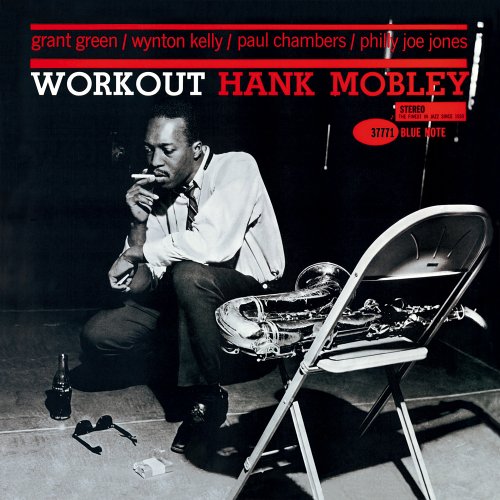
The band is Mobley with Wynton Kelly, Paul Chambers, and Philly Joe Jones playing typically of the period. I can't help but feel that Mobley is underrated as a composer and stylist, though. He's in that club with George Coleman and a few others, seemingly overshadowed by the giants they came up with. There's a lot of blues on this record, dotted here and there with elastic phrases and effervescent flurries by Mobley. Four of the six tunes are Mobley's originals, the exceptions being "The Best Things in Life are Free" and "Three Coins in the Fountain." They're interesting covers, one being rather old and the other an oddball. I like Mobley's melodic inventions and improvised embellishments of the melody. His colorful palette combined with a hard charging, muscular sound occasionally reminds me of Dexter Gordon. In the rhythm section, Jones and Chambers keep the soloists busy by mixing up the tempo, Jones occasionally very aggressive with crashes and rolls, playing melodically, not just rhythmically. Green and Kelly often solo in that order. Green has no trouble in the bebop idiom, spinning single-note solos like a bluesy sax. You can't go wrong with this or Another Workout, but for Mobley beginners, I'd start with Soul Station.
Monday, November 18, 2013
150. Wayne Shorter / Juju (1964)
Shorter's second LP for Blue Note finds him branching out as a composer and even experimenting with a different sound from his reed. There's no Lee Morgan in this group, but the rest is the same as on Night Dreamer. On the opening "Juju" he uses a harsher tone and plays stretchy, contemplative phrases that explore his interpretation of a chant-like African melody through the repetition of its few tonalities. The rhythm section pins down the whole thing, and often with Shorter sketching and resketching the vaguest of melodic ideas, it's Reggie Workman and McCoy Tyner who indicate where the melody actually is. In a word, spooky. Elvin Jones gets behind it (seemingly several times at once) and it works. The group's dynamic for much of the album is the same as it was with Coltrane's band, and it's instructional to listen to Juju's tracks mixed at random with Coltrane's Live at the Village Vanguard. Try that and tell me what you think. The fabled Workman-Tyner-Jones unit is like one animal, it has one sound, and it's a very distinctive one. Then you've got the tenor on top of that, either the master or his understudy, and either way it's magic. Like Night Dreamer before it, Juju clearly originates in blues and bop, but turn around and you'll find that shoreline quickly vanishing behind you.
Friday, November 15, 2013
149. Cannonball Adderley Quintet in Chicago (1959)
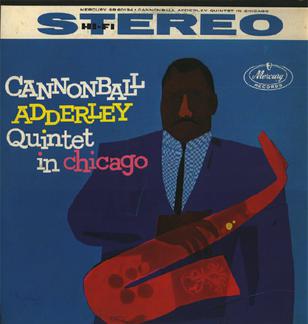
Cannonball Adderley Quintet in Chicago (aka Cannonball & Coltrane on Limelight LS 86009) is a splendid disc from the core band that recorded Kind of Blue. "Limehouse Blues" stands ragtime roots on their head in the attitude of hard bop. A sparring match between alto and tenor proceeds at breathtaking pace until the tune reels in for a final, punctual tutti on the main theme. "Stars Fell on Alabama" is next and features very sensitive embellishments from Adderley. Kelly goes next, tinkling single notes into the dusty register. As saxes go, it's a pleasure to hear the two styles in opposition. Adderley and Coltrane ride atop the rhythmic swell and strike the bar at will. But the two players are not very similar. Contrast their rhythmic interpretations of "Wabash," or technique in "Grand Central," which crackles with Trane's rhythmic inventions in fast triplets. The ballad "You're a Weaver of Dreams" is handed to Coltrane, and Kelly strolls through some jaunty figures that recall the old school with aplomb. On each track, whether it's Adderley busting open the guts of the melody and improvising endlessly thoughtful variations on its theme, or Coltrane boldly probing the rhythmic and harmonic architecture, there's always something to hang an ear on. This disc is a fine compliment to Kind of Blue, Somethin' Else, and At Newport 1958.
Monday, November 4, 2013
145. Benny Carter & His Orchestra / Further Definitions (1961)
This octet features the alto saxes of Green and Phil Woods playing across from Coleman Hawkins and Charlie Rouse on tenor. The lineup recreates the famous Green-Hawkins date from Paris 1937 while harkening back to the swing era's "dueling" sax lineups, fashioned after the Basie model. This time, several 30+ year veterans team up with players of the next generation like Woods, Rouse, and Jimmy Garrison. It's a real sympatico affair, a collage of distinctive voices working together in a shared, now classic style. Their danceable, infectious small group swing is a far cry from Impulse's stock and trade just a few years later. Carter's arrangements provide amply for the players, and the set rolls without a hitch. I love "Body and Soul," especially when Hawk plays it. It's a gem, and Carter's chart gives him all the room he wants. Woods' work on "Crazy Rhythm" (a chestnut also from the Paris date) is notable, drawing equally from the work of his mentors and his own developing style. The solid, self-assured vibe feels a lot like Duke Ellington Meets Coleman Hawkins or Verve's Ben Webster and Associates. Comparisons aside, it's something you want to own for its sheer enjoyability, if not for its historical value.
Labels:
1961,
alto saxophone,
benny carter,
charlie rouse,
coleman hawkins,
dick katz,
further definitions,
impulse,
jazz,
jimmy garrison,
jo jones,
john collins,
octet,
phil woods,
review,
tenor sax,
tenor saxophone
Saturday, October 19, 2013
143. Don Braden / The Voice of the Saxophone (1997)
Braden plays a big sounding tenor and does an admirable job arranging for his octet (which is occasionally a quartet, as with "After the Rain"). He carries most of the groove but there's also Vincent Herring, Randy Brecker, Frank Lacy and Hamiett Bluiett. The arrangements are nimble, often carried by a piano continuo, and they balance the group's massed power with spaces that feature the soloists. It's clever, and I'll forget that I'm listening to an octet before a big blast reminds me to count the pieces. The opener is Hank Mobley's swinging "Soul Station." There's a lot of good hard bop in the playlist, like Shorter's "See No Evil," or Jimmy Heath's "Voice of the Saxophone." It all sounds fresh. There's also Sam Rivers' tricky "Point of Many Returns" and some solid originals by Braden like "The Dust Kicker" and "Cozy," (nice solo by Brecker here). "Monk's Hat," which is the tune we all know as the theme from the Cosby Show, is appreciated but might be more appropriately placed at the end of the album. Kitsch aside, I like that last one well enough because it reminds me of watching Cosby! Hats off to Braden and crew for an outing that's enjoyable, danceable, and even holds a few surprises.
Labels:
1997,
cecil brooks iii,
darrell grant,
don braden,
dwayne burno,
frank lacy,
hamiet bluiett,
hard bop,
jazz,
octet,
randy brecker,
rca,
review,
tenor sax,
tenor saxophone,
the voice of the saxophone,
vincent herring
Thursday, September 12, 2013
137. Arnett Cobb and Eddie "Lockjaw" Davis / Blow, Arnett, Blow! (1959)
This Prestige date was something of a 'return' for Cobb, who had been recently injured and was retired during recovery. Fans of Mr. Davis should enjoy the album thoroughly because it's exactly the same band as the Cookbook sessions, plus Cobb. Every cut is a wild give and take between Cobb and Davis, a battle for sure. Shirley Scott, making heavy use of the drawbars and tremolo, throws gasoline on the fire more than once. The choice of an organist over a pianist makes a big difference in the total sound and Scott definitely has some good licks. The quintet setting is almost too small to contain the horns, and it does get noisy, but the arrangements are tight. It's well worth seeking out for fans of early soul jazz, or Texas tenor, or anyone studying the small group work of Cobb or Davis who were also well known as big band soloists. The opening chestnut "When I Grow Too Old to Dream" is very nice, also take a look at "Dutch Kitchen Bounce" and "The Eely One." I wonder, is that title a reference to Bud Freeman? Maybe someone in the blogosphere can tell me. One word for this album? Hot!
Labels:
1959,
arnett cobb,
arthur edgehill,
eddia lockjaw davis,
george duvivier,
jazz,
organ,
prestige,
quintet,
review,
rhythm and blues,
shirley scott,
soul jazz,
tenor sax,
tenor saxophone,
texas
Sunday, September 8, 2013
135. Ryan Kisor / Minor Mutiny (1992)
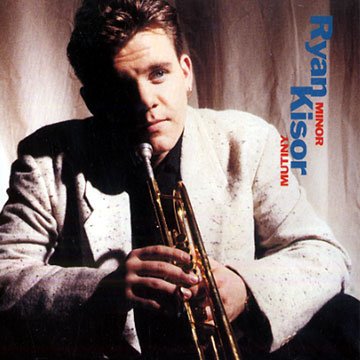
The cover, which apes Chet Baker, first grabbed me. I saw a young guy, similar features, sport coat, trumpet, and dramatic lighting. I thought, okay, let's try this out. The second thing, first hearing then reading, was the personnel including Ravi Coltrane, Lonnie Plaxico, Michael Cain, and either Jeff Siegel or producer Jack DeJohnette on drums. It's a sweet debut, a sort of double debut if you count Siegel. I was immediately swept up by the beautifully lonesome "One For Miles," which evokes Davis' "Basin Street Blues" from Seven Steps to Heaven. Kisor pays through the mute and it's a spot on, glowing tribute. My reaction was, "If this guy doesn't sound like Miles!" Yet in spite of Kisor's obvious reverence for the master, the performance isn't cliche and the style is all his own. Then there's the work by Ravi Coltrane on tenor and soprano. His tone and intonation on soprano are exemplary and the choruses take possibly the most unique voice in the group. Juxtaposition of drummers Siegel and DeJohnette do not ruin the continuity. Siegel is fantastic, playing responsively in intricate patterns all around the beat, and doesn't suffer for following an experienced musician like DeJohnette. You'll find that Siegel's playing even starts the melancholy album (there is some great mood on this disc), and he is only supplanted by DeJohnette on two tracks.
Labels:
1992,
columbia,
debut,
jack dejohnette,
jeff siegel,
lonnie plaxico,
michael cain,
minor mutiny,
quintet,
ravi coltrane,
ryan kisor,
soprano sax,
tenor sax,
tenor saxophone,
tribute,
trumpet
Friday, September 6, 2013
133. Roland Kirk / We Free Kings (1961)
This early album by Roland Kirk demonstrates some of the things he became known for a bit later on. It's a polished, enjoyable, and provocative album. Most notably, throughout the blues and soul inflected set, he plays two or sometimes three instruments at once and switches between them at lightning speed. While blowing the blues on the flute, he likes to screech, howl, and sing along. There aren't any drop-ins from the board, no spliced takes. Obviously with one man filling four chairs, the arrangements revolve around him. As a testament to his talent, it works seamlessly. Kirk has an inspiring technique and sweet tone on all instruments. His style of improvising, I think, clearly departs from the Coltrane bag he was once lumped into. The band is Hank Jones or Richard Wyands, drums is Charlie Persip (great choice), and bass is Art Davis or Wendell Marshall. Through his technique and instrumentation, Kirk puts a unique spin on old tunes, and kicks out his own compositions, as well. After this album, Kirk's journey continued to seek new directions, ever expanding, ever exploring. We Free Kings isn't just nice for listening, it's also nice for perspective. It shows his music is steeped deeply in blues and bop, but the trajectory for future dates would always be farther out than before.
Labels:
1961,
art davis,
charlie persip,
flute,
hank jones,
hard bop,
manzello,
mercury,
quartet,
review,
richard wyands,
roland kirk,
stritch,
tenor sax,
tenor saxophone,
verve,
we free kings,
wendell marshall
Thursday, September 5, 2013
132. John Coltrane / Fearless Leader (2006)
Coltrane's Prestige albums have been available in various formats since the 1950s. Another chapter in the flood of repackaged Coltrane on CD, Fearless Leader places his earliest recordings as leader in chronological order. This allows serious listeners to study his development as composer, arranger, and stylist without having to track down the individual records. Moreover, by removing these recordings from their in-album sequences, they exist in a proper or at least more authentic musical context. They transcend the supposition that is imposed by arbitrary sequencing and stand their ground against one another, in the order they were created. Listening to the whole box, or at least a good chunk of it in one sitting, is a rewarding experience. From the outset, Coltrane's groups are well rehearsed and the arrangements are tight. Throughout the progression, it's exciting to hear Coltrane's tone become more sonorous, his technique sharper, more assured. In addition to the leader, there's Paul Chambers, Art Taylor, Red Garland, Mal Waldron, Freddie Hubbard, and others. We hear them take some excellent shots at the blues, as well as Coltrane's peerless balladry in classic chestnuts like "Lush Life" (Donald Byrd around the 9-minute mark, wow), and some early sheets of sound ("Black Pearls," "Russian Lullaby"). Across six discs, there's too much to discuss here. Somebody could, and several people have, written books on this music. The concept of the six-disc set, plus accompanying booklet with copious photos and notes, make it a really attractive package. Unless you want the individual albums, I'd say this is a core collection item.
Labels:
1957,
1958,
2006,
fearless leader,
hard bop,
jazz,
john coltrane,
post bop,
prestige,
quartet,
quintet,
sextet,
tenor sax,
tenor saxophone,
trio
Wednesday, September 4, 2013
130. Charlie Parker / Charlie Parker with Strings: The Master Takes (1995)
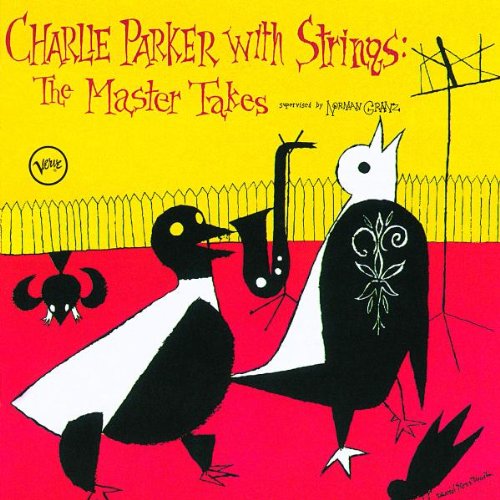
If you're only interested in Bird's famous recordings with a small orchestra, then you can save a little coin with this attractive disc. (It's only fair to say that for just a few extra bucks, $20 on average for used, you can have all the material here plus much more and better liner notes if you buy the Complete Verve Masters.) But as this disc's title indicates, it contains the complete master takes of Bird's famous 1950 sessions with strings. In addition to the 14 tracks contained on the original two LPs by Mercury, the Verve CD contains 10 bonus tracks recorded 1947-1952. The orchestral numbers are all standards, and when they work, it's magic. Some have argued that this was a commercial sell out. It was so successful that it led to a flood of other artists playing with strings. The truth is that Parker himself always wanted to play with an orchestra, and these recordings fulfilled his dream. In the greater context of jazz today, I think it's a stale argument and intentions don't matter. Who cares whose idea it was? Hey, it's Bird, there's some extra musicians, and the result is warm, elegant, and hard to turn off. Whoever can't enjoy such an engagement must be difficult to please. Likewise are my feelings for Cliff Brown, Dizzy, or anybody else who went in the studio with an orchestra in the 1950s.
Labels:
1947,
1948,
1949,
1950,
1951,
1952,
bebop,
bop,
charlie parker,
charlie parker with strings the complete master takes,
mercury,
orchestra,
review,
tenor sax,
tenor saxophone,
verve
Saturday, August 31, 2013
129. Hank Jones and Frank Wess / Hank and Frank (2006)
Requiring no introduction, Hank Jones and Frank Wess have one of the best jazz albums of the past 20 years. Aside from Jones and Wess, bassist John Webber (try "You Made a Good Move") guitarist Ilya Lushtak, and drummer Mickey Roker make an appreciable impact, too. This is uber classic jazz with universal appeal. The joy in listening, for me, comes from how together the group is. Playing this music is beyond natural to the co-leaders and on the record, the product of their skills sounds as easy as breathing. Wess doubles on tenor and flute. To make a play on that line about "breathing," try listening to his beautiful lines on ""The Very Thought of You." There is a wide variety of material from blues to bossa nova, and don't miss the four originals by Wess or the tune by Mr. Parker like "Barbados." Best of all, if you can't get enough of Hank and Frank then you can always buy the second volume. Yes, there is a second volume.
Labels:
2006,
blues,
bossa nova,
flute,
frank wess,
hank and frank,
hank jones,
hard bop,
ilya lushtak,
john webber,
lineage,
mickey roker,
piano,
quintet,
review,
tenor sax,
tenor saxophone
Sunday, August 18, 2013
124. Chuck Mangione / Love Notes (1982)
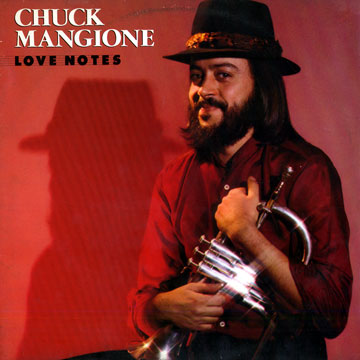
Love Notes has a cool and subdued feel, even for Mangione. But its charm is a sublimely clear tension roiling just beneath the surface that erupts in moments like the bright and sudden resurgences of mysterioso theme in "No Problem." I love the big and squibbly tone of Mangione's flugelhorn, and slippery technique that puts a human stamp on a style of jazz that too often gains marketability at the expense of character. During "No Problem," Mangione's minimal statements and restatements come and go over a funky vamp that recalls Miles Davis, weaving in and out of the choruses by Chris Vadala, a presence lurking in the eaves. The solos by Vidala and Peter Harris are excellent, mixing a clear appreciation of bop that stays close to the tune and deep in the groove. "Memories of Scirocco" is an evocative, songlike standout, combining bluesy inclinations with a subtly Latin flavor. Vadala breaks out the soprano midway and gets in some short, fiery licks that make the album worth having. "To the 80's" comes under fire of finger pops but retains an appeal for the classics with a melody that wouldn't be out of place on a Sonny Clark or Cliff Jordan date. Lastly, the title track is a wistful, smoldering ballad that closes the proceedings thoughtfully, dressed delicately by Vadala and Mangione.
Labels:
1982,
alto saxophone,
chris vadala,
chuck mangione,
columbia,
everett silver,
flugelhorn,
flute,
gordon johnson,
love notes,
peter harris,
piccolo,
quintet,
review,
smooth jazz,
tenor sax,
tenor saxophone
Subscribe to:
Posts (Atom)
.jpg)