Recent listening, current
Archived listening, 2013-2016
Showing posts with label jo jones. Show all posts
Friday, December 20, 2013
160. Duke Ellington & Johnny Hodges / Side By Side (1959)
I put this album in the "essential" pile. From the first punchy, rather
Dukelike chords in "Stompy Jones," we're off to the races with two sessions
comprised of Ellington and Basie alumni. I love listening to Sweets
Edison in the context of a small group. His lines in "Stompy" are clean, concise,
and eloquent, ringing out above the swinging bass, Jo Jones' crashing cymbals and Duke's
rhythmical encouragement. Those two guys -- Duke Ellington and Jo Jones
-- make quite the pair midway through the tune when the front line lays
out and lets them have a round of aggressive chords and
crashing percussion. Hodges comes back just in time for a
joyous, New Orleans style melee at the end. The lineup with Ellington
and Sweets only does three of the album's nine tracks ("Stompy,"
"Squeeze Me" and "Going Up"). The second session is a septet recorded
six months earlier with Billy Strayhorn, Ben Webster, Roy Eldridge,
Wendell Marshall, and Lawrence Brown. The character is similar but the
different chemistry is easy to hear. Of course the soloists change, Eldridge's style is flashier than Sweets', but
there's also a different sentimental quality and certain reserve presiding over cuts like "Let's Fall in
Love" that is absent from the music with Ellington. Maybe it's Webster. Or maybe it's Strayhorn? Who knows. Regardless of which band you prefer, this disc is wonderful.
Labels:
1958,
1959,
al hall,
ben webster,
billy strayhorn,
duke ellington,
harry sweets edison,
jo jones,
johnny hodges,
lawrence brown,
les spann,
roy eldridge,
septet,
sextet,
side by side,
verve,
wendell marshall
Monday, November 4, 2013
145. Benny Carter & His Orchestra / Further Definitions (1961)
This octet features the alto saxes of Green and Phil Woods playing across from Coleman Hawkins and Charlie Rouse on tenor. The lineup recreates the famous Green-Hawkins date from Paris 1937 while harkening back to the swing era's "dueling" sax lineups, fashioned after the Basie model. This time, several 30+ year veterans team up with players of the next generation like Woods, Rouse, and Jimmy Garrison. It's a real sympatico affair, a collage of distinctive voices working together in a shared, now classic style. Their danceable, infectious small group swing is a far cry from Impulse's stock and trade just a few years later. Carter's arrangements provide amply for the players, and the set rolls without a hitch. I love "Body and Soul," especially when Hawk plays it. It's a gem, and Carter's chart gives him all the room he wants. Woods' work on "Crazy Rhythm" (a chestnut also from the Paris date) is notable, drawing equally from the work of his mentors and his own developing style. The solid, self-assured vibe feels a lot like Duke Ellington Meets Coleman Hawkins or Verve's Ben Webster and Associates. Comparisons aside, it's something you want to own for its sheer enjoyability, if not for its historical value.
Labels:
1961,
alto saxophone,
benny carter,
charlie rouse,
coleman hawkins,
dick katz,
further definitions,
impulse,
jazz,
jimmy garrison,
jo jones,
john collins,
octet,
phil woods,
review,
tenor sax,
tenor saxophone
Saturday, July 27, 2013
117. Ben Webster and Associates (1959)
Similar to the Rollins/Coltrane session Tenor Madness, much of Webster's Ben Webster and Associates feels like friends trying out ideas with relatively no pressure. In other words, a damned good jam session. Of course, with this lineup, the music has a completely different feel than Sonny Rollins and Coltrane. Webster and Co. start off with "In a Mellow Tone," and keep at it for over 20 minutes. It's so enjoyable, it's a shame the tune has to end. There's room for everyone: Webster, Budd Johnson, Hawk, Roy Eldridge, even Ray Brown gets two choruses. The excitement building for the final push to the end isn't to be missed. They next turn up the heat for "De-Dar," a bluesy tune with with a boisterous arrangement that swings hard. As far as the tenors go, I like listening to all the different styles on the same record -- Johnson's streamlined and laconic phrases in double time, Hawk's strident tone emerging like a dark horse, and Webster alternately growling or whispering but always playing straight. "Time After Time" strips Johnson, Hawkins, and Eldridge for a more intimate setting and allows further explorations in the diverse sound that Webster was famous for. So what are you waiting or? Get on the stick! This should be on every shelf.
Thursday, April 18, 2013
85. Lester Young / The Jazz Giants (1956)
The Green-Ramey-Jones factor is in effect here, as Lester blows for the first time alongside the exquisite Roy Eldridge and Vic Dickenson. Teddy Wilson provides piano, his first date with Prez in a decade, and the whole thing really swings. The chemistry is great and it's a good listen. Knowing who is on the session, I love hearing one chorus while waiting for the next guy. Lester does some fireworks (try "Gigantic Blues," also note Eldridge, Wilson and Jones) but he sounds profoundly blue throughout the others. I never bought the description of Prez as lean or
altoesque, or however that's said. He's got a big, sonorous tone
that portrays (and occasionally betrays) every nuance of the piece. These are mostly ballads so it suits this album especially well. In the arrangements, Lester usually goes first followed by Dickenson or Eldridge. When they get to the end, the whole band takes it out. It reminds me of a big band arrangement, and harnesses the septet's additional weight to good effect.
Tuesday, March 19, 2013
56. Count Basie / Count Basie at Newport (1957)
This set is a giant. Basie already has a power packed orchestra with Thad Jones, Frank Foster, Frank Wess, Sonny Payne, Freddie Greene, and a handful of others. But he invites superstars from his past bands to join them. Lester Young, Jimmy Rushing, Jo Jones, Joe Williams, and Illinois Jacquet all have a few moments to play with the current band. It's powerful music that is energetic, exciting, inspired, and obviously enjoyed by everyone on the stand and in the crowd. The tracks with Basie's reformed orchestra -- sleek and modern, young but steeped in swing and the blues -- are a nice contrast with older, swing-based musicians like Lester doing "Polka Dots and Moonbeams" followed by a frenetic "Lester Leaps In" and Jimmy Rushing singing the jaw dropping blues "Sent for You Yesterday and Here You Come Today." Rushing's gigantic voice demonstrates what it takes in terms of volume and stage presence to stand out in front of the most motley orchestra in the business. The old chemistry is still there, and this album, like Duke's record from Newport '56, demonstrates that big band wasn't dead yet.
Labels:
1957,
big band,
blues,
count basie,
count basie at newport,
frank foster,
frank wess,
jazz,
jimmy rushing,
jo jones,
joe williams,
kansas city,
lester young,
review,
swing,
thad jones,
verve
Sunday, February 10, 2013
30. Zoot Sims / Whooeee! (1956)
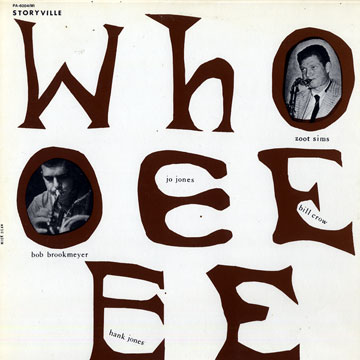
Zoot Sims always got it right. The albums were consistently excellent and already on the early ones he was confident and mature. His phrasing was economical and concise, driven by the melody and carried by a sweet, full tone. Did this guy ever play a clam? It's almost frustrating. Whooeee! is rare in the US but you can find it on Four Classic Albums by AVID Jazz (originally on Storyville), cheap for an import. If you listen closely, it's obviously a needle drop, especially the drums. But it's a goodie and after 20 years of bootleg collecting, a clean needle drop sounds like blue sky to me. The band is great: Bob Brookmeyer, Jo Jones, Hank Jones, and Bill Crow. Everyone is bent on melodic improvising, and they take their time, creating a spacious and friendly vibe. Hank Jones does these great, tinkling single-note solos, like on "Lullaby of the Leaves" where everyone lays out so Hank and Crow can trade licks to the gentle whoosh of Jones' hi-hat. Brookmeyer sounds great playing in unison with Sims, and the creamy vocal perfectly ensconced in the middle of "I Can't Get Started" is a rare treat, too. Four stars.
Subscribe to:
Posts (Atom)