Recent listening, current
Archived listening, 2013-2016
Showing posts with label louis hayes. Show all posts
Monday, January 6, 2014
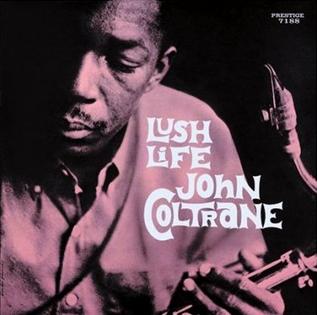
167. John Coltrane / Lush Life (1961)
While Prestige's Lush Life was not released until 1961, it was recorded by Van Gelder during three sessions in '57 and '58. As he was no longer recording for the label, Coltrane had no say in it but ironically, the record contains a few of his choicest recordings playing in the small group, hard bop setting. This was an incredibly fertile period for Coltrane. He had yet to compose the seminal works that later appeared on Blue Note and Atlantic but was already working on the technique and musical ideas that would define his legacy. The first three tracks present Coltrane as leader of a pianoless trio, fleshing out a lot of chords in lieu of the keyboard. The most memorable moment on Lush Life is probably the title track, a luscious ballad owned by the leader until around nine minutes in when Donald Byrd steps out of the woodwork for some equally inspiring lines on the trumpet. Two years ago I was at a stoplight listening to this on the radio and was so transfixed by Byrd's meandering melancholy that it took a horn blast from the car behind me to break the reverie. While I'll never recreate that moment, I can still listen again and again. "Trane's Slo Blues" is also notable for Coltrane's moves inside the changes. These tracks appear on the boxset Fearless Leader although they are not presented in the same sequence as they are here, which is actually quite good.
Labels:
1957,
1958,
1961,
albert heath,
art garland,
art taylor,
donald byrd,
earl may,
hard bop,
john coltrane,
louis hayes,
lush life,
paul chambers,
prestige,
quintet,
tenor,
tenor sax,
tenor saxophone,
trio,
trumpet
Sunday, April 14, 2013
81. Cliff Jordan / Cliff Craft (1957)
Here a truly swinging rhythm section (Sonny Clark, George Tucker, Louis Hayes) plays in support of leader Cliff Brown, who shows his versatility as a composer (the entire first side bears his name) and soloist on tenor sax. The phrases of his choruses, like those on "Soul-Lo Blues" and the exquisite "Sophisticated Lady" (therein, also listen to Tucker) are long and fluid, sometimes developed across several bars with thoughtfully timed. His front line includes Art Farmer on cornet, adding a layer of glossy professionalism to the session. The two horns sound great in unison or offsetting each other, as in "Cliff Craft" trading fours while Louis Hayes fills in between. Sonny Clark gets plenty of room in fresh, bluesy single-note solos that echo those of Jordan or Farmer. The session is a relaxed one, a good example of the hard bop quintet commonly purveyed by Blue Note during the 1950s. I can't overemphasize that rhythm section enough, the or the comfortable fluidity of Jordan's tenor. Those qualities jump out at me the most on this date, and what a great date it is.
Wednesday, April 10, 2013
77. Nat Adderley / Work Song (1960)
Some corners of hard bop were already getting funky by 1960 but Nat's classic album still sounds ahead of the curve. Selections are like a hard bop stew, highly inspired music expressed in various forms of funkified rhythm and blues, bop, gospel, and truly aching ballad work. Sam Jones makes an impression on me. He slides all over the place and plays his choruses as if he has a guitar sitting on his lap. His doubling on cello and movement to the front line boldly pays big dividends. Wes Montgomery was in on the session, and between these two there's enough bluesy gumption to hold down that part of the fort. This doesn't stop everyone else from contributing, though. The early "Work Song" and Cannonball's "Sack of Woe" are a fine one-two punch, except they're separated by three equally impacting tracks. At times, Adderley breaks the sextet down to a trio or quartet so there's evidence that this group could be effective hitting on all six or with just half its compliment. It's an album with levels that has staying power for a reason, fine music thoroughly worth its salt.
Labels:
1960,
bobby timmons,
cornet,
hard bop,
jazz,
keter betts,
louis hayes,
nat adderley,
percy heath,
quartet,
review,
rhythm and blues,
riverside,
sam jones,
sextet,
soul jazz,
trio,
wes montgomery,
work song
Monday, April 1, 2013
68. Freddie Hubbard / The Artistry of Freddie Hubbard (1962)
This is Hubbard's fifth album as leader, and his first recorded for the Impulse! label. The music is hard bop inside and out, but Hubbard's sextet undergoes some changes with trombone Curtis Fuller, and John Gilmore moonlighting away from the Arkestra. Together they stretch out in some lengthy jams and experimental explorations that lean clearly in the direction of the Impulse! ethos. "Bob's Place," "Summertime," and "The 7th Day" really put eyebrows on the proceedings. The reworking of "Caravan" is interesting, too. Gilmore is especially captivating. Like a musical alchemist, he plays long, sustained notes in lengthy phrases that unmoor the notes from their melodies. On compositions like "The 7th Day" or "Bob's Place" these contrast with the backdrop of the vamp, creating the effect of pure tonal color and presenting the tones themselves in striking relief beside their harmonic relationships. Tommy Flanagan on piano, Louis Hayes does drums, Art Davis bass. I like this side trip from the early Hubbard formula quite a bit.
Monday, February 25, 2013
44. Harold Land / West Coast Blues! (1960)
Half the group is from New York and the other half from California, but the session doesn't sound like a novel meeting of East and West, and they actually sound like they know each other pretty well. Land is a good leader. He developed his own approach to hard bop on the tenor and was a prolific composer. This record features three of his compositions. He plays with a strong sense for the rhythm, and the influence of the blues haunts each lick. The opener is the sexy but hard swinging "Ursula," as good an introduction to Land's tone and style as any. He gets down to bop and rhythmic counterpoint by next covering Charlie Parker's complicated "Klactoveedsedstene." It's nice to hear Montgomery do a Charlie Parker composition because Bird was such a big influence on him, and of course, he's right at home. Joe Gordon takes some flashy solos and also plays nicely in unison with Land. In Land's provocative tone is the quality of a high harmonic that sounds like a signal just on the verge of breaking up, giving the music an urgency that isn't lost in the fullness of the whole sound. His style is bop-oriented and fluid, but very accessible, a clear intermediary between the music and the audience.
Subscribe to:
Posts (Atom)