Recent listening, current

Showing posts with label 1959. Show all posts

Monday, January 13, 2014

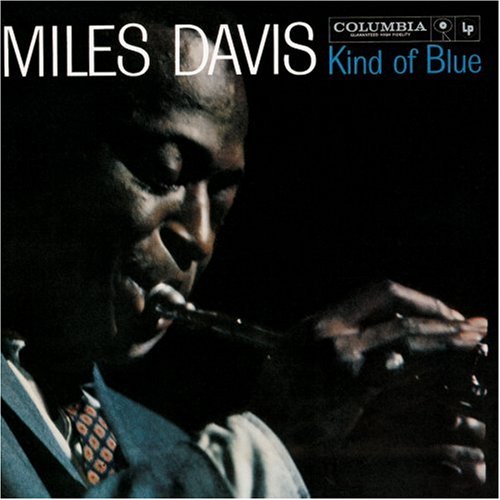
168. Miles Davis / Kind of Blue (1959)

A review of Kind of Blue seems pointless. I'll muse for a few hundred words, and then quit. I imagine a world without this record, and that is a difficult world. It's a world where Bill Evans didn't sub for Wynton Kelly, a world in which countless musicians were struck by inspiration elsewhere. A world that is one milestone short of properly demarcating the future. A world where your brain is not irresistibly and without permission drawn to referencing all subsequent Miles Davis dates to this one. It's a world without the myth of it all being done in one take, a world where you don't have to buy that other CD to find out that what you missed was not really anything special. In this world, 1959 is not terribly different than 1958 or 1960. The Columbia vault is one cart of tapes lighter. It's a party that went one album different. It's the late night DJ who selects something by Cliff Brown instead. It's a world where the porter didn't see the CD on my passenger seat. It's a world where as a teenager, I didn't once stop my bicycle in the middle of an intersection to change the batteries of my headset. It's a world where my daughter was lulled into dreamland by someone else's trumpet, and awakened by someone who was not John Coltrane. It's a lot the same, but it's not the same, and I'd rather have it with Kind of Blue.

Friday, December 20, 2013

160. Duke Ellington & Johnny Hodges / Side By Side (1959)

I put this album in the "essential" pile. From the first punchy, rather Dukelike chords in "Stompy Jones," we're off to the races with two sessions comprised of Ellington and Basie alumni. I love listening to Sweets Edison in the context of a small group. His lines in "Stompy" are clean, concise, and eloquent, ringing out above the swinging bass, Jo Jones' crashing cymbals and Duke's rhythmical encouragement. Those two guys -- Duke Ellington and Jo Jones -- make quite the pair midway through the tune when the front line lays out and lets them have a round of aggressive chords and crashing percussion. Hodges comes back just in time for a joyous, New Orleans style melee at the end. The lineup with Ellington and Sweets only does three of the album's nine tracks ("Stompy," "Squeeze Me" and "Going Up"). The second session is a septet recorded six months earlier with Billy Strayhorn, Ben Webster, Roy Eldridge, Wendell Marshall, and Lawrence Brown. The character is similar but the different chemistry is easy to hear. Of course the soloists change, Eldridge's style is flashier than Sweets', but there's also a different sentimental quality and certain reserve presiding over cuts like "Let's Fall in Love" that is absent from the music with Ellington. Maybe it's Webster. Or maybe it's Strayhorn? Who knows. Regardless of which band you prefer, this disc is wonderful.

Friday, November 15, 2013

149. Cannonball Adderley Quintet in Chicago (1959)
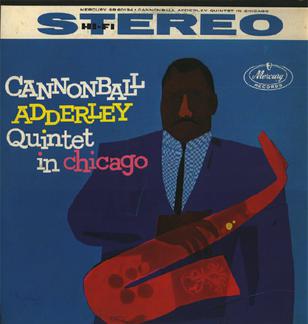
Cannonball Adderley Quintet in Chicago (aka Cannonball & Coltrane on Limelight LS 86009) is a splendid disc from the core band that recorded Kind of Blue. "Limehouse Blues" stands ragtime roots on their head in the attitude of hard bop. A sparring match between alto and tenor proceeds at breathtaking pace until the tune reels in for a final, punctual tutti on the main theme. "Stars Fell on Alabama" is next and features very sensitive embellishments from Adderley. Kelly goes next, tinkling single notes into the dusty register. As saxes go, it's a pleasure to hear the two styles in opposition. Adderley and Coltrane ride atop the rhythmic swell and strike the bar at will. But the two players are not very similar. Contrast their rhythmic interpretations of "Wabash," or technique in "Grand Central," which crackles with Trane's rhythmic inventions in fast triplets. The ballad "You're a Weaver of Dreams" is handed to Coltrane, and Kelly strolls through some jaunty figures that recall the old school with aplomb. On each track, whether it's Adderley busting open the guts of the melody and improvising endlessly thoughtful variations on its theme, or Coltrane boldly probing the rhythmic and harmonic architecture, there's always something to hang an ear on. This disc is a fine compliment to Kind of Blue, Somethin' Else, and At Newport 1958.

Thursday, September 12, 2013

137. Arnett Cobb and Eddie "Lockjaw" Davis / Blow, Arnett, Blow! (1959)

This Prestige date was something of a 'return' for Cobb, who had been recently injured and was retired during recovery. Fans of Mr. Davis should enjoy the album thoroughly because it's exactly the same band as the Cookbook sessions, plus Cobb. Every cut is a wild give and take between Cobb and Davis, a battle for sure. Shirley Scott, making heavy use of the drawbars and tremolo, throws gasoline on the fire more than once. The choice of an organist over a pianist makes a big difference in the total sound and Scott definitely has some good licks. The quintet setting is almost too small to contain the horns, and it does get noisy, but the arrangements are tight. It's well worth seeking out for fans of early soul jazz, or Texas tenor, or anyone studying the small group work of Cobb or Davis who were also well known as big band soloists. The opening chestnut "When I Grow Too Old to Dream" is very nice, also take a look at "Dutch Kitchen Bounce" and "The Eely One." I wonder, is that title a reference to Bud Freeman? Maybe someone in the blogosphere can tell me. One word for this album? Hot!

Monday, August 5, 2013

121. Johnny Griffin, John Coltrane, Hank Mobley / A Blowin' Session (1957)

Blue Note's A Blowin' Session featuring Little Giant, Trane, Hank Mobley, Lee Morgan, Wynton Kelly, Paul Chambers, and Art Blakey sounds exactly as you'd think it would. It's technically a Griffin date, who is leader, composer, and one third of the groups's tenor sax nucleus. But Morgan gets plenty of time, and so do Kelly and Blakey, for that matter as if Blakey's hard to miss. The meeting was a pickup after the Chicago-based Griffin found himself in New York at the same time as the others. With so many good players, it's a jazz buffet. The septet shows its talent in tracks like "The Way You Look Tonight," or the swinging ensemble groove of "Ball Bearing." As two horns who played with Miles Davis so close together, listening to Trane in opposition to Mobley is interesting (see Prestige's Two Tenors or Tenor Conclave for more of Trane and Mobley together). Morgan's licks on "Smoke Stack" set the pace for the rest of the group, though Coltrane feels overburdened, it's still my favorite cut on the album. Thankfully, there is an alternate take on the Blue Note CD that offers him a second chance as well as a wild good performance from Griffin. Why they issued the original take instead of this one remains a mystery to me, unless for the outstanding work by Morgan. As a note, this album also marks th eonly ecorded meeting between Griffin and Coltrane.

Friday, May 24, 2013

105. Benny Golson / Groovin' with Golson (1959)

Golson only has a single composing credit on this album ("My Blues House"), which is too bad considering how much I enjoy his style of jazz. But that tune, a slow blues, is the very first one on Groovin'. It is adequately seasoned with Curtis Fuller's flashy statements on trombone, perhaps more than Golson himself. Things move to a mid tempo piece "Drum Boogie" that swings hard with Art Blakey at the helm, before cooling down with the Rodgers and Hart standard "I Didn't Know what Time it was." Golson's sax blends sweetly with Fuller's trombone, and both are accomplished soloists. It's nice to hear their tones in opposition, too, as in "The Stroller" where a caustic Golson veritably peels the paint off the walls before we hear Fuller's punchy but softer sounding approach with short, staccato phrases. There's some brilliant piano work by Ray Bryant, possibly overshadowed by Golson or Fuller but easily underrated. Chambers and Blakey get a turn before everyone does fours and the thing wraps up. The quiet "Yesterdays" finishes the album with a whisper. Groovin' was recorded immediately before the formation of the Jazztet, but it's easy to see where things were going. I think here, Blakey gives a hard edge that was missing from even the Jazztet's most brilliant moments.

Tuesday, April 16, 2013

83. Benny Golson / Gone with Golson (1959)

Rooted in Don Byas, et al., Golson takes at least one conservatively melodic chorus before stepping out a little farther. He's a very melodic player overall, but by the end of his turn, he's rushing ahead like a steam locomotive of emotional force. His arrangements and compositions are superb. In those furious bursts of energy it's easy to see his influence on Coltrane, but the leader's skills as composer also attracted Trane. Like the peculiar resolutions in "Soul Me" which work within, rather than toward, the gospel mode to ply such an intriguing charm. As for sidemen, Curtis Fuller is indispensable, transcending the slide and keenly harnessing the dynamic capabilities of his horn to make sympatico statements after Golson (try "Autumn Leaves). Brothers Ray and Tommy Bryant are an important unit whether it's comping, impeccable timekeeping, or taking their own choruses. So is Al Harewood felt, together about as solid a rhythm section as you could ask for. There's no Art Farmer in sight, but this isn't a Jazztet date and it's nice to watch Golson fly on his own, as it usually is.

Friday, April 5, 2013

72. Frank Sinatra / No One Cares (1959)

This collection of lovelorn standards is about as dark as Sinatra gets. The selections, with orchestra, were arranged and conducted by Gordon Jenkins. They collaborated on several other albums for Capitol, and oddly enough this is my favorite. Sinatra supposedly referred to this as a set of suicide songs, although I haven't verified that. One might listen and think some levity is in order, but is it really? While the material and arrangements are stormy (the photo on the jacket ain't no joke), the mood is a nice change of pace and Sinatra's mature performance is rich and captivating. He sings confidently and in good voice, working through the likes of "I Don't Stand a Ghost of a Chance," "I Can't Get Started," and the superb "Stormy Weather," and a handful of others big and small. I think some of these performances might be worthy of their own benchmarks, even as high as the bar was set by other performers in earlier times. Enjoy the CD which contains several previously unreleased bonus tracks.

Wednesday, March 6, 2013

52. Gerry Mulligan Meets Johnny Hodges (1959)

Once upon a time, Verve (and the other labels, too) did a handful of records where one player "meets" another. These albums are like fantasy baseball for jazz. Some are really good, while others start and finish without really accomplishing anything. This time it clicks. Together, Mulligan and Hodges do a smooth and balanced set comprised of six originals, three from each. On Side 1, Mulligan's "Bunny" and the self-descriptive "What's the Rush?" set the mood, before moving into the swank, bluesy territory of Hodges' "Back Beat" and "What It's All About." Claude Williamson, Buddy Clark and Mel Lewis are the rhythm section, and are good at keying in on what the leaders are doing. Sonically, the saxes are a sweet blend with Claude Williamson and the carefully considered bass lines of Buddy Clark. When Mulligan and Hodges take choruses, the one will start developing where the other left off. There's no requirement for this, it's just good artistry. So instead of going in two personal directions with the rhythm section plodding in tow, Mulligan and Hodges make the album a cohesive and jointly constructed product. No surprises musically speaking, nothing groundbreaking, no one trying to bring down the roof. But does there need to be? It's just really good jazz from five great musicians.

Saturday, March 2, 2013

49. Thelonious Monk / The Thelonious Monk Orchestra at Town Hall (1959)

I like to think I can hear the splice in "Little Rootie Tootie," although I'm probably imagining it, a necessary evil because of a tape flip that missed the middle. Are there any tapers out there? You can identify. It's a good set, and arrangements for the 10-piece band showcase the soloists, like liquid Charlie Rouse, Phil Woods, Pepper Adams, or Donald Byrd. They also blow good ensemble figures and frame Monk's angularisms and wild chords within a richer ocean of sonority, so there's a lot of lift in the music. Some of these tunes, warhorses for small groups, sound as if they've found home at long last in a big band, like the majestic take of "Monk's Mood" or the jumping "Rootie." Just listen to ten guys blowing the head of "Rootie" around the 7-minute mark. Holy cow! That's tight! I think it works wonderfully. This performance finds Monk emerging from the '50s as mature and bursting with new ideas, about to enter his most productive decade just a few months ahead. For the full effect of the band, you've really got to turn up the volume on the stereo so it sounds like you're in the hall. It's electrifying.

Thursday, February 14, 2013

34. Milt Jackson & John Coltrane / Bags and Trane (1961)

Released after My Favorite Things, Giant Steps, and Coltrane Jazz, this collaboration was recorded in 1959, and was actually the first album to be recorded by Coltrane on his new contract with Atlantic. It was sensible to wait until '61 to release it. Because while it's very good music, blues and standards by a quintet, and the exchange of ideas between Trane and Bags during improvisations makes it a few cuts above what it could be, given their prior associations, this album doesn't make the same splash. He wasn't their guy anymore, so you could view it as a safe play for Atlantic while Coltrane was en route to Impulse. I don't understand why Atlantic altered the sequence of the original LP when they released the CD, but they did. In this case, I don't think it matters. The Bags-penned blues numbers like "Late Late Blues" and "Blues Legacy" are my favorites. It seems that no matter where they were in the music, the blues were never very far behind either player, and that's a good thing. 

Tuesday, February 12, 2013

32. The Jimmy Giuffre 3 / The Easy Way (1959)

The Easy Way is darned sneaky, the way it passes so quietly upon first listening. The music is so sparse that it stops your breath like a stillborn moment, a feeling almost too sparse, but the second time around, that same quality forces a closer inspection and reveal ongoing relationships of very dynamic interplay at the heart of the chemistry. I keep going back to it. In this 1959 session, Giuffre swaps bassist Ralph Pena for Ray Brown, trading the busy sound of Pena for Brown's commanding and bluesy style. They work with it. On "Ray's Time" we get an extra dose of the Ray dimension while Jim Hall comps and Giuffre lays out. When Giuffre is playing he is taking a lot of ideas from Brown and Hall, who turn them right back around. The album is divided into two distinct halves: the first comprised of blues like the Ray tune and standards like "Mack the Knife," and a more exploratory or section, marked by "Time Enough," "Montage," and "Off Center."