Recent listening, current

Showing posts with label flute. Show all posts

Saturday, December 27, 2014

198. Frank Wess / Opus in Swing (1956)

This pianoless quintet led by the flute of Frank Wess also lacks his other instrument, the alto sax. Accordingly, he's in top form whether it's pounding high notes in the blue gloom of "Southern Exposure" or adding harmonic color to the serpentine leads of "Somewhere Over the Rainbow." Also moonlighting from the Basie Band are Eddie Jones and Freddie Green who keep time with Kenny Clarke so tight it's telepathic. The quintet excels in the same music that Basie's bands made famous. Like Basie's, their combo has an undeniable group dynamic, but every man is heard as his own solo artist. Together, they drive the music with one mind, then shine forth as individuals during the moments when one man stands alone. It's impossible to appreciate one quality without noticing the other. Kenny Burrell is notable. Listen to "East Wind." Green trades chording for a more pianolike approach that walks, while Klook keeps time with the cymbals and Wess sketches the heavy mood with dense vibrato. When he lays out, Burrell bursts the seams with bluesy runs and relevant single note phrases that underscore the character of the melody and polish the rhythm. It's choice stuff, a potent brew of Kansas City swing that has been seasoned with the developments of postwar New York.

Monday, December 9, 2013

157. Gene Harris Quartet with Frank Wess / It's the Real Soul (1995)

Recorded live across two nights in March of 1995, these eight tracks feature the Gene Harris Quartet (Ron Eschete, g; Luther Hughes, b; Paul Humphrey, d) in the company of Frank Wess. Wess divides his time between four tracks, playing tenor on "Menage a Bleu" and "Estoril Soul," then flute on "Straight No Chaser" and "My Funny Valentine." He is as expressive on the flute as Harris is on the piano, unleashing a diverse assortment of perky phrases and exciting techniques that frame the Monk tune in a perfectly jaunty way, and adding lots of personality to "My Funny Valentine." Nice as it is to have him around for the proceedings, the core band plays with such a big sound and heavy swing that I don't miss him on the other half of the record. Harris works well with guitarist Eschete. Their cooperation in splitting the breaks of "Lady Be Good" turns the old tune into a memorable affair, their choruses developing patiently until the mood reaches a fever pitch. "That's All," which is the last tune on the album, is a fitting closer. Harris teases "Rhapsody in Blue" before really pounding into fully chorded statements, with the crowd loving it. His style on the keyboard is often described as being rooted in a gospel tradition and tracks like "You Don't Know Me" clearly substantiate those descriptions.  

Friday, September 6, 2013

133. Roland Kirk / We Free Kings (1961)

This early album by Roland Kirk demonstrates some of the things he became known for a bit later on. It's a polished, enjoyable, and provocative album. Most notably, throughout the blues and soul inflected set, he plays two or sometimes three instruments at once and switches between them at lightning speed. While blowing the blues on the flute, he likes to screech, howl, and sing along. There aren't any drop-ins from the board, no spliced takes. Obviously with one man filling four chairs, the arrangements revolve around him. As a testament to his talent, it works seamlessly. Kirk has an inspiring technique and sweet tone on all instruments. His style of improvising, I think, clearly departs from the Coltrane bag he was once lumped into. The band is Hank Jones or Richard Wyands, drums is Charlie Persip (great choice), and bass is Art Davis or Wendell Marshall. Through his technique and instrumentation, Kirk puts a unique spin on old tunes, and kicks out his own compositions, as well. After this album, Kirk's journey continued to seek new directions, ever expanding, ever exploring. We Free Kings isn't just nice for listening, it's also nice for perspective. It shows his music is steeped deeply in blues and bop, but the trajectory for future dates would always be farther out than before.

Saturday, August 31, 2013

129. Hank Jones and Frank Wess / Hank and Frank (2006)

Requiring no introduction, Hank Jones and Frank Wess have one of the best jazz albums of the past 20 years. Aside from Jones and Wess, bassist John Webber (try "You Made a Good Move") guitarist Ilya Lushtak, and drummer Mickey Roker make an appreciable impact, too. This is uber classic jazz with universal appeal. The joy in listening, for me, comes from how together the group is. Playing this music is beyond natural to the co-leaders and on the record, the product of their skills sounds as easy as breathing. Wess doubles on tenor and flute. To make a play on that line about "breathing," try listening to his beautiful lines on ""The Very Thought of You." There is a wide variety of material from blues to bossa nova, and don't miss the four originals by Wess or the tune by Mr. Parker like "Barbados." Best of all, if you can't get enough of Hank and Frank then you can always buy the second volume. Yes, there is a second volume.

Sunday, August 18, 2013

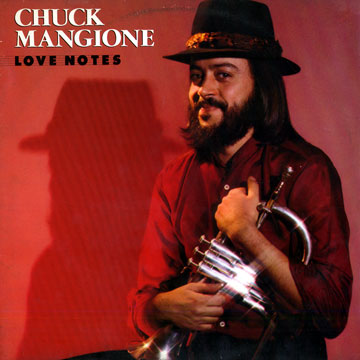
124. Chuck Mangione / Love Notes (1982)

Love Notes has a cool and subdued feel, even for Mangione. But its charm is a sublimely clear tension roiling just beneath the surface that erupts in moments like the bright and sudden resurgences of mysterioso theme in "No Problem." I love the big and squibbly tone of Mangione's flugelhorn, and slippery technique that puts a human stamp on a style of jazz that too often gains marketability at the expense of character. During "No Problem," Mangione's minimal statements and restatements come and go over a funky vamp that recalls Miles Davis, weaving in and out of the choruses by Chris Vadala, a presence lurking in the eaves. The solos by Vidala and Peter Harris are excellent, mixing a clear appreciation of bop that stays close to the tune and deep in the groove. "Memories of Scirocco" is an evocative, songlike standout, combining bluesy inclinations with a subtly Latin flavor. Vadala breaks out the soprano midway and gets in some short, fiery licks that make the album worth having. "To the 80's" comes under fire of finger pops but retains an appeal for the classics with a melody that wouldn't be out of place on a Sonny Clark or Cliff Jordan date. Lastly, the title track is a wistful, smoldering ballad that closes the proceedings thoughtfully, dressed delicately by Vadala and Mangione.

Monday, April 29, 2013

96. Eric Dolphy / Conversations (1963)

The first side of this LP contains loosely swinging and glittering interpretations of two tunes ("Jitterbug Waltz" and "Musical Matador") that are, upon first impression, standard enough. But in Dolphy's hands they are things transmuted: multiform, elastic musical caricatures, elating and jubiliant. They are filled with evocative solos by Dolphy and feature tantalizing interplay with his group. Bobby Hutcherson paints the walls with thick chords and his two independently minded mallets seem to dance in circles while Dolphy ambulates on whichever instrument in the foreground. While the second side contains a shade of what colors the first, it is largely a different, darker and more serious, affair. Still rooted deeply in traditional material and reverently anchored to its origins, the music of Side Two seeks progress in the opposite direction. Like Dolphy's solo extemporizing of "Love Me," where his phrases adopt the cadence and tonality of the human voice and the alto literally speaks. In an impassioned conversation between two lovers (I think, but who knows?), he blows figures that invoke the ballad's humanity: blind, animalistic and primal sounds of raw feelings. It is beautiful but also adeptly cerebral, setting the stage for the centerpiece to come, "Alone Together." This is a reaching, expressionistic and inherently modern synthesis of traditional jazz and contemporary art music. Together with  The Iron Man (recorded during the same sessions and itself another under-appreciated slab of Dolphy alchemy) the two records play like notecards to Dolphy's thesis presented on Out to Lunch. The final 13-minute piece creeps along just Davis and Dolphy, capriciously turning corners and building up others in its wake, as if trying to lose an unseen pursuer. With the preponderance of university and public radio jazz programs, this octet needs more attention. Airplay, airplay! It's like a Dolphy codex, a smaller, more manageable prototype of the brilliance that was to come.