Recent listening, current

Showing posts with label 1971. Show all posts

Friday, January 27, 2017

211. Can / Tago Mago (1971)

Each of Can's albums is distinctly a product of the legendary ensemble, but each also presents its own direction and tone. Tago Mago is the first turning point. As the maiden voyage with Damo Suzuki, it opens the period of their most innovative work. "Paperhouse" displays the new chemistry: unintelligible motivic phrases are intoned, sometimes shouted by Suzuki. His strained voice is utilized for its value as a rhythm instrument, and also for texture. The caterwaul is entwined with Michael Karoli's grainy, insect-like guitar, while jitterbugging around Jaki Liebezeit's impeccable, discomfiting claptrap. Elsewhere, fragments of surreptitiously recorded rehearsals are draped over layers of arranged material in moody loops that crash together with the anxiety of cut-and-paste editing. "Mushroom" features a disorienting reversed vocal and further collisions of noise and melody. Moving into the dense heart of the album, "Halleluwah" is the archetype for Can's trailblazing approach to music. Suzuki mumbles and howls over noisy keyboards and chiming guitars, while Liebezeit parades in zombie fashion to the track's uncertain conclusion 18 minutes later. It's a 2-LP set, audacious and necessary. The music moves without being touched, as if by enchantment. If there exists a skeleton key to understanding Can and everything after, this is it.

Saturday, September 17, 2016

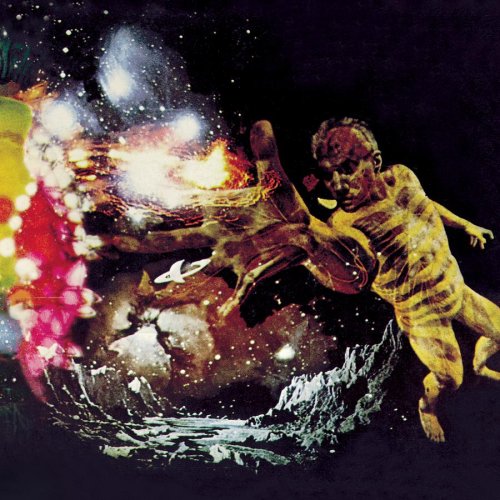
210. Santana / Santana III (1971)

In the dictionary next to the word "essential," you'll find a picture of this album. Sandwiched between the seminal Abraxas and the revolutionary Caravanserai, Santana's third LP finds the band now very comfortable inside their invention, that unique fusion of Afro-Cuban rhythm with pan-Latin import and the ferocious, unrelenting pound of a psychedelic rock and roll band in full flight. If you liked Abraxas, don't forget to go the extra step and get this one, too. Because none were doing it in 1971, and none have done it better since. I think it's amazing how fresh and how mature the group sounds for just the third album, and yet, with all the swirling Hammond organ, raucous percussion and abrasive guitar, the thought of Caravanserai's chill embarkation for parts unknown almost brings a tear -- and by the way, I love Caravanserai. Compared to its immediate predecessor in the discography, III is rougher around the edges, a little more relentless in its pursuit of the groove, and maybe even a little less accessible. The music is fully cooked and raging. It sounds a lot like a live album, and the segues between tracks are so tight that they beg you to look for the seams. The audio quality on all available CD editions is stellar, and the "Legacy" edition contains a full live set from July 04, 1971 at the Fillmore West, plus extra studio sessions. Play it loud! 

Saturday, November 23, 2013

153. Miles Davis / Big Fun (1974)

Listening to Miles go electric 40 years ago, critics were in a different position. They took issue with his stylistic developments, because 1974 was much different than 1954. They were too close to see that the intervening years would witness Davis' massive influence on successive generations. Today we see what happened, so we evaluate their merits on another scale. It bears mentioning that these aren't records I can listen to every day. I don't have that kind of time to invest on a daily basis. Like Bitches Brew, the music on Big Fun explores modality through orchestration and arrangement. The tracks are brimming with textures, melodic ideas, and moods. Themes are played and repeated, then recalled, then played again. The effect is haunting, like beasts looming in a fog, vanishing and reappearing. After 22 mnutes, the effect is glacial. Like it says in the liner to Coltrane's Ascension, you shouldn't turn it on without expecting to hear at least a whole side. You can't be interrupted for a few minutes without the magic being broken, and the arc is lost with just a few minutes of play time. Collaborations with Zawinul like "Recollections" or "Great Expectations" fulfill the promise, and typify what's found elsewhere throughout the record. As if you really need a curveball, Davis added sitar and tabla.


Tuesday, February 5, 2013

26. Dizzy Gillespie / Dizzy Gillespie & the Mitchell-Ruff Duo (1971)

Dizzy plays live at Dartmouth College with the under appreciated duo of Dwike Mitchell and Willie Ruff. His association with the duo dates to New York in the 1950s where they were often booked in the same clubs. This night, Diz is in top form, very relaxed, and plays some solos that recall his agility from earlier decades, also interjecting humor into bits between songs. Willie Ruff has developed an idiosyncratic, inventive brand of rhythm on the string bass, he also plays elegant music on the French horn that adds brassy class to tracks like "Dartmouth Duo." Most of the set is what I expect from Dizzy ("Woody'n You," some Billy Strayhorn picks, "Con Alma") but there is a beautiful blues in the aptly titled "Blues People" and also an original by Willie Ruff called "Bella Bella" that isn't easily overlooked in the middle of the program. Overall, it's a very strong set from Dizzy Gillespie aged 54, with two very interesting and not often heard "sidemen" wrapping their duo chemistry around the familiarity of another musician. It's a shame this album has gone out of print with no sign of a reissue.

Thursday, January 31, 2013

21. Grant Green / Live at the Club Mozambique (2006)

Green's guitar style is fully developed in this live doc from 1971. His band vamps eminently danceable figures that give him carte blanche to work his trade. Green likes concise licks that accentuate the rhythm and carry the groove. He's fond of double-picked notes and fat slides, staccato figures that stop on a dime, or bluesy runs that play between the bars in cleverly syncopated phrases. It's full speed ahead from "Jan Jan" on, and the energy never subsides. The horns are really tight, and my favorite track is Thomas' composition "Farid," which has room for both tenormen, the dark and swirling organ work of wildman Ronnie Foster, as well as a heavy helping of Idris Muhammad, rattling like a mystical machine gun on the traps, both melodically and rhythmically. The formula here is a far cry from Grant's First Stand and doesn't quite touch Alive, but it absolutely sizzles with a new strain of soul that fearlessly carries the Green into the new decade. Many of these are R&B staples, but restated and renewed. Try the euphoric "Walk on By" and you'll see what I mean.