Recent listening, current

Showing posts with label rock. Show all posts

Thursday, October 22, 2020

215. George Harrison / Early Takes, Vol. 1 (2012)

I listen to this collection of demos and early takes more often than I do All Things Must Pass. I love Harrison's chords... there are so many good changes. Most takes are just him with a guitar, and sometimes a drum track or overdub. It's an intimatre setting: you can hear his feet on the floor keeping time, or taking breaths between phrases. The simplicity of the demos lets their beauty shine through unobstructed. This is easy music for a hard time... "All things must pass away," as Harrison reminds us. Also: "You don't need a horoscope or a microscope to see the mess you're in." Right? Well, it is 2020. Every bit helps.

Saturday, September 17, 2016

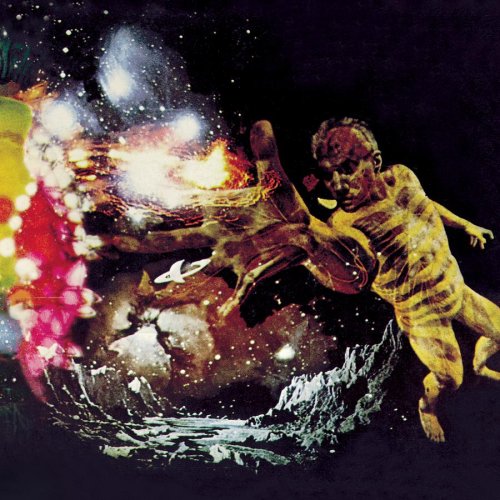
210. Santana / Santana III (1971)

In the dictionary next to the word "essential," you'll find a picture of this album. Sandwiched between the seminal Abraxas and the revolutionary Caravanserai, Santana's third LP finds the band now very comfortable inside their invention, that unique fusion of Afro-Cuban rhythm with pan-Latin import and the ferocious, unrelenting pound of a psychedelic rock and roll band in full flight. If you liked Abraxas, don't forget to go the extra step and get this one, too. Because none were doing it in 1971, and none have done it better since. I think it's amazing how fresh and how mature the group sounds for just the third album, and yet, with all the swirling Hammond organ, raucous percussion and abrasive guitar, the thought of Caravanserai's chill embarkation for parts unknown almost brings a tear -- and by the way, I love Caravanserai. Compared to its immediate predecessor in the discography, III is rougher around the edges, a little more relentless in its pursuit of the groove, and maybe even a little less accessible. The music is fully cooked and raging. It sounds a lot like a live album, and the segues between tracks are so tight that they beg you to look for the seams. The audio quality on all available CD editions is stellar, and the "Legacy" edition contains a full live set from July 04, 1971 at the Fillmore West, plus extra studio sessions. Play it loud! 

Friday, November 7, 2014

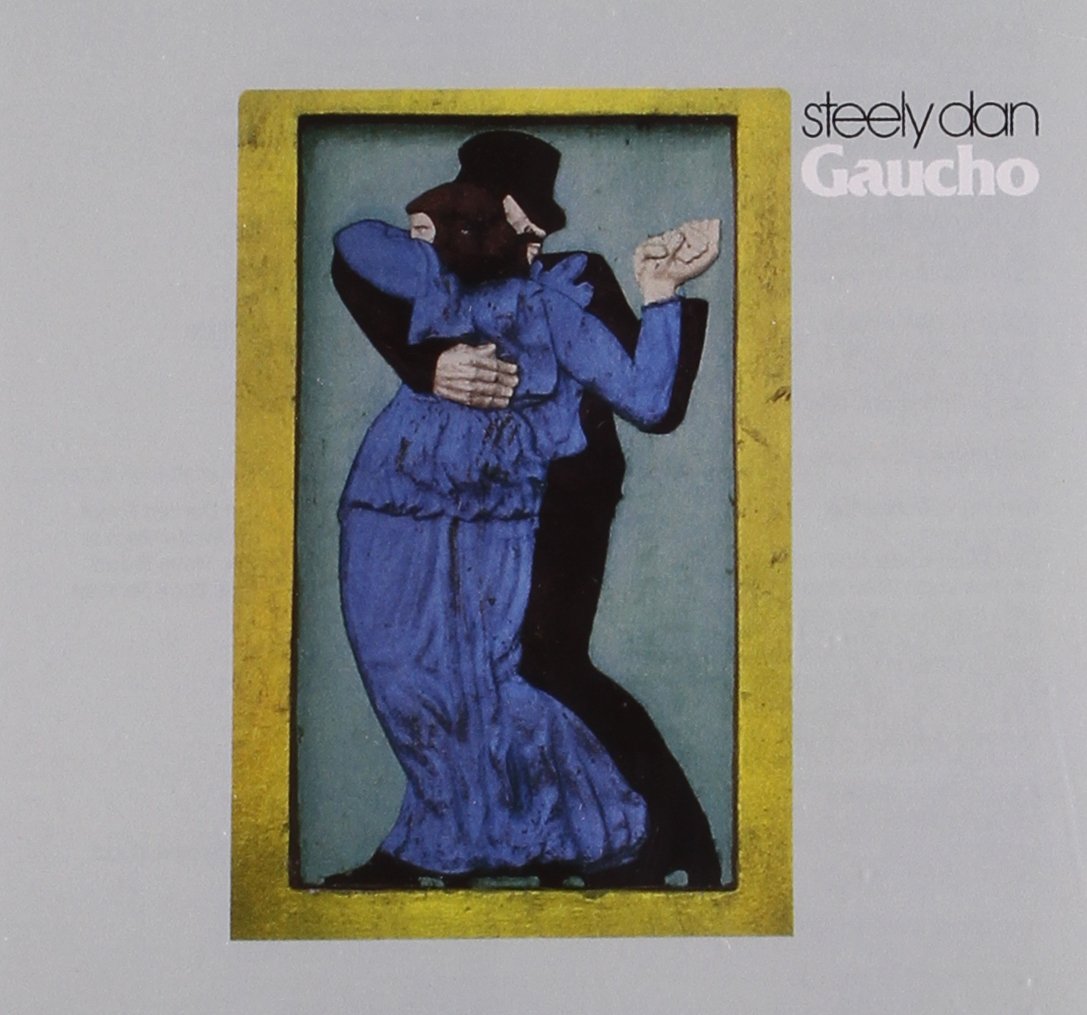
197. Steely Dan / Gaucho (1980)

Gaucho is the last album before the Dan's 12 year hiatus. It's the capstone of the original run, a grooving foil to Aja's majestic sophistication, and the proverbial semibreve rest in the ongoing saga of the Becker/Fagen partnership. Instead of trying to reinvent the wheel, Gaucho swaps Aja's complexity for simple charts and chill vibrations that recall classic rock, rhythm, and soul. Here, the down tempo is on tap and the beats play straight ahead.  Hear "Babylon Sisters" shimmer with rich sonority, lush background vocals and immaculately layered overdubs, and you get the picture. Gaucho is also notable for the drum machine (engineer Roger Nichols' "Wendel") lending additional consistency to the already smooth track sequence. If you like Steely Dan, then chances are you won't be disappointed by the fare on Gaucho. But at the same time, while these are unmistakably "Steely" tunes, I think it is also the most stylistically distinct album in the catalog. As always, make of that what you will.

Monday, March 3, 2014

189. Donald Fagen / Morph the Cat (2006)

Morph the Cat is a good representative of the Donald Fagen solo catalog. It is every yard a Fagen product whose pristine sonics and glossy group choruses recall the perfectionist grandeur of Aja and underplayed soul vamps of Gaucho or Nightfly. I prefer the guitar on Morph by Wayne Krantz, his variety of techniques and effects, to the guitars heard on Sunken Condos. Fagen also rocks the Fender Rhodes, ringing in that classic Steely Dan sound. Some lyrical themes nod in the direction of the aged, slyly morose matters explored further on Condos. But at this stage, our heroes, perhaps, aren't as willingly resigned to their fates as they will be in 2012. Some of these characters make the best of the New World Order, however, swaggering into the 21st century as if it were still 1975. Like the guy who picks up the TSA girl in "Security Joan." Fagen is the only living writer other than Murakami who can write a guy into a one night stand at the airport. But they're not all success stories. Former showbiz kids make jaundiced appearances in songs like "The Night Belongs to Mona," or the the unwitting pokes whose night vices all lead them to meet the man in the "Brite Nightgown." You'll be in familiar company with the motley assortment, and all nine tracks are rendered in sparkling audio.

Thursday, December 26, 2013

162. Steely Dan / Countdown to Ecstasy (1973)

The followup to Can't Buy a Thrill is like the great early Steely Dan album that no one talks about. It's understandable for a band with things like Aja or Pretzel Logic lurking in the back catalog. Much like Scam, the band's second LP seems destined live in the shadow of its discographical neighbors. But the songcraft is wise and clever, a subtly sophisticated mix of pop, blues, rock, soul and jazz. And like Royal Scam and Katy Lied, it helps set up the stylistic direction that reached its pinnacle with Aja. I find it amazing that this is only their second record. It's an instructional antithesis to the sophomore slump. Appreciating its heights and evenness compared to the debut does much to illustrate the talents of the creators. To say the least, Becker and Fagen are really hitting their stride by this time. The pieces for each future masterwork are in place: First thing to gel is Fagen doing all the lead vocals, killing the herky-jerky transitions heard on Thrill. Denny Dias and Jeff Baxter split the guitar duties, Baxter contributing pedal steel and six string. But there are notable session players, too, like Ray Brown on "Razor Boy," Rick Derringer on "Showbiz Kids," Ernie Watts on "My Old School," and Victor Feldman playing several instruments through both sides. The lyrics come into their own, filled with wry references, quotable one-liners, and unforgettable character studies that are simultaneously explicit and oblique. Some of the music is visionary, too. "Pearl of the Quarter" has been described as "country," but to my ear it is something closer to the further amalgamation of American musical idioms, presaging that which in later decades we would come to call Americana. I love all the SD albums and go through phases where one will sit on my stereo for longer than the others. Right now, Ecstasy is "the one." So excuse me as I put on my headphones and turn on to the curt, sardonic strains of "Bodhisattva" once again....

Monday, April 8, 2013

75. The Bad Plus / Prog (2007)

I admit the title caught my eye: Prog. I like Bad Plus well enough, even if their brand of jazz-rock fusion tends to wear thin (or thick) on my ears after so long. In jazz we describe them as a piano trio. I say they're a power trio, lying closer to Cream than Oscar Peterson. Sure, that's a minor conundrum of classification, but this is an interesting album, and what we call "jazz" has become an interesting field, to say the least. There are some terrific originals (I like Iverson's "Mint" and Anderson's epic "Giant"), but this record's trick is in the interpretation of progressive rock like Rush ("Tom Sawyer"), David Bowie ("Life on Mars"), and Tears for Fears ("Everybody Wants to Rule the World"). These invoke the roots of both the prog rock and jazz-rock fusion, a crossing of wires in a genre of crossed wires. I love it. Remember Mahavishnu Orchestra, Miles Davis, and Return to Forever? How they smashed exploratory jazz head-on with the fury of electricified rock and roll? All those extravagant displays of musicianship that pushed the envelope so far into left field that the genre designation didn't just stop mattering, it ceased to be? My language skirts hyperbole, but that's how I feel when I listen to Prog. I think they've really hit the nail squarely with this record -- it is innovative, attentive, intelligent, and really exciting. It cuts straight to the root of why these compositions have come to be what they are to us, and why we appreciate either style of music, running with that idea until the band is out of string and must make its own. And that thrill is why I listen to jazz.