Recent listening, current

Showing posts with label 1964. Show all posts

Monday, November 18, 2013

150. Wayne Shorter / Juju (1964)

Shorter's second LP for Blue Note finds him branching out as a composer and even experimenting with a different sound from his reed. There's no Lee Morgan in this group, but the rest is the same as on Night Dreamer. On the opening "Juju" he uses a harsher tone and plays stretchy, contemplative phrases that explore his interpretation of a chant-like African melody through the repetition of its few tonalities. The rhythm section pins down the whole thing, and often with Shorter sketching and resketching the vaguest of melodic ideas, it's Reggie Workman and McCoy Tyner who indicate where the melody actually is. In a word, spooky. Elvin Jones gets behind it (seemingly several times at once) and it works. The group's dynamic for much of the album is the same as it was with Coltrane's band, and it's instructional to listen to Juju's tracks mixed at random with Coltrane's Live at the Village Vanguard. Try that and tell me what you think. The fabled Workman-Tyner-Jones unit is like one animal, it has one sound, and it's a very distinctive one. Then you've got the tenor on top of that, either the master or his understudy, and either way it's magic. Like Night Dreamer before it, Juju clearly originates in blues and bop, but turn around and you'll find that shoreline quickly vanishing behind you.

Saturday, September 7, 2013

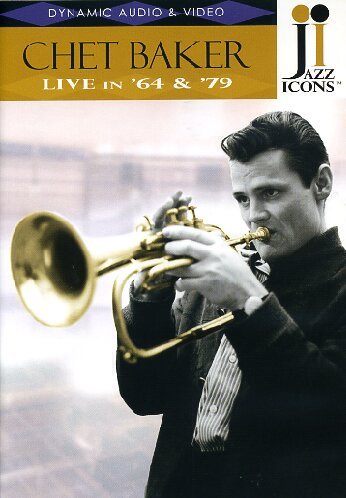
134. Chet Baker / Live in '64 and '79 (2006)

Baker's music definitely matured, although his development is sometimes difficult to appreciate given how his drug habit impacted his life and performances. This DVD from Jazz Icons shows him playing with two European groups, 15 years apart. In the '64 quintet I sense tension between the underplayed Baker and overactive pianist Rene Utreger, who is constantly throwing heavy handed chords at the end of Chet's phrases, sometimes before they appear to be completed. It's like a leadership dispute, and the band or producers clearly have their own ideas about who falls where. In spite, Baker manages a lovely "Time After Time," though the quintet's take on "So What" seems like a missed opportunity. Baker has trouble finding space to express himself and fights with the group, and also has difficulty with the intonation. The second performance is from '79 and begins with an interview that segues into "Blue Train," in progress. Baker says his lyrical approach to improvising has become more subtle with experience and the performance reflects this. The drummerless quartet is much more together than the '64 group, thankfully, and Baker's rich sumptuous tone pervades the set. Although "Blue Train" is truncated (which stinks, because what we do hear is beautiful), we get a heavy swinging and creative take on "Softly As In a Morning Sunrise" with Baker's smoothly flowing melodic improvisation, the occasionally interesting turn of a chord, and overriding melancholic appeal. Also notable are pianist and vibraphonist Michele Graillie and Wolfgang Lackerschmid. I like this installment of Jazz Icons for the contrast it provides between a younger Baker and an older, perhaps wiser player with a more respectful band.  

Wednesday, April 3, 2013

70. John Coltrane / Crescent (1964)

I love this album because it is so moody. Only during "Bessie's Blues" does he lighten up, although not for very long. I guess it's fitting that it comes from a different session. Jones sounds like rain to me, even when using sticks. He shuffles, clicks, clacks, swooshes, and bangs, just like a thunderstorm. It's the perfect accompaniment to Coltrane's moody tenor, and rhythmically speaking, gives him a long leash. Tyner contributes in a similar fashion, creating a colorful backdrop of notes that sound very much like the sheets of rain in a storm. The last track is pretty much all Jones, called "The Drum Thing." Contrasting with Trane's more exploratory work, these performances are almost rigidly disciplined. He doesn't abandon what he learned in the intervening years, he just applies it differently. The result is a more mature formulation of the post-bop he was doing during for Prestige, richly imagined and deeply reverent of its roots. It's something of a calm before the storm in the Coltrane canon, considering that the next year witnessed A Love Supreme and the year after, Ascension.