Recent listening, current

Showing posts with label alto saxophone. Show all posts

Tuesday, May 6, 2014

194. Louis Jordan & His Tympany Five / Choo Choo Ch'Boogie (1999)

Choo Choo Ch'Boogie is another terrific compilation of golden era R&B from the ASV/Living Era imprint. Jordan was a versatile vocalist whose act ran the gamut from vaudeville to jump to gut-busting blues. His smooth delivery and expertise with turning a phrase took dancers from cutting figures on the floor to falling down laughing. He was also an altoist with a nimble technique whose reserve of power drew comparisons to Earl Bostic. The set is a good representation of his repertoire from 1940-1947. In crisp audio, it includes famous numbers like his own "Caldonia," "Five Guys Named Moe," or "Let The Good Times Roll." But the playlist also has novelties like the hilarious calypso with Ella Fitzgerald (both ex-Chick Webb), "Stone Cold in de Market" or "What's the Use of Getting Sober (When You're Gonna Get Drunk Again)?" No stranger to the drink whose wife Fleecie twice tried to kill him by stabbing, Jordan sings these with confidence! His blues are followed by his alto, with nary a breath between verse and chorus. "Ration Blues," "Somebody Done Changed The Lock on My Door" and "Ain't that Just Like a Woman," show Jordan working his charm with sly double meaning and steamy intent. Fans of early rock and roll or Chicago blues will appreciate Jordan's work, and this is a fine place to start. Babs Gonzales, Slim Gaillard, King Pleasure, all similar.

Thursday, January 23, 2014

170-173. Four albums by Gigi Gryce Quintet and Gigi Gryce Orch-Tette, 1960-1961

This CD release by Fresh Sound collects the last four LPs by Gigi Gryce: Saying Somethin'; The Hap'nin's; The Rat Race Blues; and Reminiscin'. I think they were originally released on Jazzland, but I have to double-check. Gryce was respected and admired as an altoist and composer, and he is heard on a good many dates by other leaders. But he left performing and recording for the field of education... PS 53 in the Bronx, to be precise. In that regard, he reminds me of people like Nathan Davis, Donald Byrd, or Dave Van Kriedt who quit the scene to become educators. Sadly, Gryce's memory gets lost, because in an age of new ideas, he just kept on playing hard bop and never really made a big splash. What he didn't accomplish by comparison to his peers is irrelevant. As this set shows, Gryce made some excellent music. His effortless, sometimes abrasive lines and unique approach to the blues are rock solid. I know everyone's blues is unique but it's nice to hear a person say it his way. Likewise, Gryce's arrangements of "Summertime," "A Train," "Lover Man," and "Caravan" put a vivid new spark into the old warhorses. I'm thankful we have the recordings he left and if you haven't heard of him, then you now have a new musician to look into.

Wednesday, January 1, 2014

164. Ernie Watts Quartet / Ernie Watts Quartet (1987)

This self-titled LP featuring Watts as the chief soloist is pretty hard to fault. Watts' craft and professionalism are what's on display here, and they are impressive to say the least. Watts is a diversely talented musician capable of playing with ease in a dizzying assortment of styles and settings, and this album does well to demonstrate his chops on tenor, alto, and soprano saxes while playing pop, hard bop, and the blues. By 1987, he had done extensive session work in Los Angeles that refined his technique from a streetwise hard bop sound to the razor edge of instinct and technical facility required for more specific demands as a hired horn. Side 1 opens with "Language of the Heart," a smooth pop tune that never strays far from the melody. But the next track is a mean slice of hard bop called "Continental Blues." The dramatic juxtaposition of these styles proclaims YES, this man will do both! Here and elsewhere, Watts switches from heavy lines in a tough tone to effervescent double-time eruptions of verbosity that probe the harmonic architecture of the changes. Even when he's on alto, Watts reminds me a lot of John Coltrane. I appreciate the group's thoughtful rendition of "Body and Soul," which is dedicated to Mr. Coltrane, and at 6:02 is also the longest track on the record. Pat Coil, whether driving the rhythm, comping, or interplaying intelligently with Watts, wins the prize for underrated sideman of the hour. Often, in the more predictable spots, his piano maintains my interest when the melody from Watts just isn't enough. Timekeeping Leatherbarrow and Dibartolo are also notable.

Friday, December 6, 2013

155. Earl Bostic / Flamingo (2002)

Flamingo is a double disc compilation by the UK's Proper Records label, covering 1944 to 1951. The audio quality is very good. These groups are like many of the transitional orchestras of the 40s and early 50s. They feature veterans alongside torchbearers from swing to bop and beyond. In the early sides, we hear Bostic with Rex Harris, Cozy Cole, Don Byas, Tiny Grimes, and Lionel Hampton. Later, in his stripped down R&B orchestra, we hear a sampling of Jimmy Cobb, Wilbur Campbell, and Jaki Byard. Listen for the transition from gut busting alto to what became Bostic's trademark technique. In the 1949 sextet, tracks like "Filibuster" show repeated riffing with huge tone, but also a nimble fingered aptitude for clean, double-time runs through the scales, colored here and there with reed buzz. The lovely "Serenade" (Gene Redd on vibes) has a similar feel. Like Ben Webster, Bostic could play with arresting power, or sublime gentleness. "Flamingo," probably his best known track, has become the archetypal rendition, although it isn't much different in structure or appeal than other sides recorded by the group. I like the later sides best, but the early ones are priceless, too. 

Tuesday, December 3, 2013

154. Gene Ammons and Sonny Stitt / Boss Tenors (1961)

If you've got the stereo disc then Ammons is in the right channel and usually goes first. Stitt is in the left channel and comes next, occasionally doubling on alto. The latter was one of the most inspiring alto players there was, but he gets short shrift. A whiz on the alto, he was equally capable on tenor or even baritone (no barisax on this disc). These two players make wonderful music together. It's a solid dance session, with plenty of fireworks and some intriguing knots in the choruses that may interest more serious listeners. "There is No Greater Love" features Stitt on alto. His exhilirating double-time chourses are a thing to marvel at. While trading jabs with each other, the horns take unexpected sidesteps outside the blues, like in Ammons' first chorus of "Autumn Leaves," or some of Stitt's phrases in the smoking "Blues Up and Down." The rhythm section of John Houston, Buster Williams, and George Brown has a good chemistry. Williams' timekeeping meshes well with Brown, and especially Houston's comping style, which favors chunky, chorded statements emphasizing the beat. Their interplay with the leaders during "Blues Up and Down" really kicks the tune into a higher gear. This is a memorable session, and quite enjoyable, to say the least.

Friday, November 15, 2013

149. Cannonball Adderley Quintet in Chicago (1959)
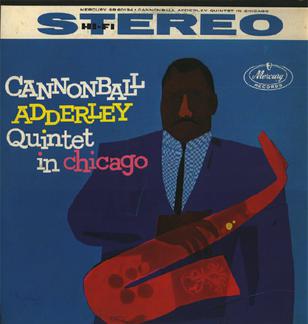
Cannonball Adderley Quintet in Chicago (aka Cannonball & Coltrane on Limelight LS 86009) is a splendid disc from the core band that recorded Kind of Blue. "Limehouse Blues" stands ragtime roots on their head in the attitude of hard bop. A sparring match between alto and tenor proceeds at breathtaking pace until the tune reels in for a final, punctual tutti on the main theme. "Stars Fell on Alabama" is next and features very sensitive embellishments from Adderley. Kelly goes next, tinkling single notes into the dusty register. As saxes go, it's a pleasure to hear the two styles in opposition. Adderley and Coltrane ride atop the rhythmic swell and strike the bar at will. But the two players are not very similar. Contrast their rhythmic interpretations of "Wabash," or technique in "Grand Central," which crackles with Trane's rhythmic inventions in fast triplets. The ballad "You're a Weaver of Dreams" is handed to Coltrane, and Kelly strolls through some jaunty figures that recall the old school with aplomb. On each track, whether it's Adderley busting open the guts of the melody and improvising endlessly thoughtful variations on its theme, or Coltrane boldly probing the rhythmic and harmonic architecture, there's always something to hang an ear on. This disc is a fine compliment to Kind of Blue, Somethin' Else, and At Newport 1958.

Monday, November 4, 2013

145. Benny Carter & His Orchestra / Further Definitions (1961)

This octet features the alto saxes of Green and Phil Woods playing across from Coleman Hawkins and Charlie Rouse on tenor. The lineup recreates the famous Green-Hawkins date from Paris 1937 while harkening back to the swing era's "dueling" sax lineups, fashioned after the Basie model. This time, several 30+ year veterans team up with players of the next generation like Woods, Rouse, and Jimmy Garrison. It's a real sympatico affair, a collage of distinctive voices working together in a shared, now classic style. Their danceable, infectious small group swing is a far cry from Impulse's stock and trade just a few years later. Carter's arrangements provide amply for the players, and the set rolls without a hitch. I love "Body and Soul," especially when Hawk plays it. It's a gem, and Carter's chart gives him all the room he wants. Woods' work on "Crazy Rhythm" (a chestnut also from the Paris date) is notable, drawing equally from the work of his mentors and his own developing style. The solid, self-assured vibe feels a lot like Duke Ellington Meets Coleman Hawkins or Verve's Ben Webster and Associates. Comparisons aside, it's something you want to own for its sheer enjoyability, if not for its historical value.

Tuesday, September 10, 2013

136: Art Pepper / The Return of Art Pepper: The Complete Aladdin Recordings, Vol. 1 (1988)
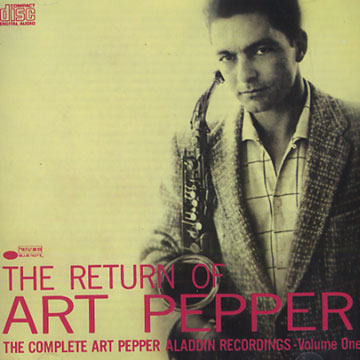
There are two groups here, recorded 1956 and 1957. The first group features Pepper straight out of prison and recording again. It's a somewhat unbalanced group and Pepper's style is intact but languishing. This makes instructive listening, considering how hot he could be on a good recording, I find it fascinating to see between the lines for a few moments while his fingering isn't as nimble and the ideas are developing more slowly. There's some good balladry ("You Go to My Head") and some flashy piano and trumpet from left coasters Russ Freeman and Jack Sheldon. The gems, for me, come in the pickup band on tracks 11-15 with Joe Morello and Red Norvo. This group was put together on the fly, presumably with little or no rehearsal, and the miracle is that it's a really tight date with a really positive chemistry. Morello was leader. "Tenor Blooz," "Yardbird Suite" and "You're Driving Me Crazy" show Pepper's style in full flight. Also, Norvo and Carl Perkins, and Pepper's interplay with Perkins, are not to be missed. If I had the choice to keep one disc out of this Aladdin set, The Return of Art Pepper might not be my first choice, but the Morello/Norvo recordings redeem it.

Monday, August 19, 2013

125. Dave Brubeck Quartet / Dave Digs Disney (1957)

For all its thunder and snark, the Brubeck quartet improvised with a childlike curiosity, and Brubeck and Desmond both employed a genuinely sentimental touch with ballads. Maybe it's the music's built-in humor and romance, but I sense something very natural about this group covering Disney songs. Of course, the band was no stranger to the material, so there's the easy explanation, but they're clearly enjoying it. "Alice in Wonderland" is a breezy treat, with Desmond blowing blues into his explorations of the theme before trading jabs with Brubeck. "Heigh-Ho" is rendered at an uptempo clip and with a tough tone by Desmond before a romp by Morello. But it's shortest piece on the album and for all its perkiness, it's almost a footnote. A few pieces retrospectively transcend the Disney brand such as "When You Wish Upon a Star," or "Some Day My Prince will Come." The latter would eventually be made famous by Miles Davis, and is a further example of Brubeck's prescience. I overlooked this set for a long time because I thought it was a novelty act, but I was dead wrong. For further examples of Disney jazz, try Disney Songs the Satchmo Way, Everybody Wants to be a Cat, or Sun Ra's reverently maniacal settings of "Heigh Ho" and "Zip-A-Dee-Doo-Dah," among others.

Sunday, August 18, 2013

124. Chuck Mangione / Love Notes (1982)
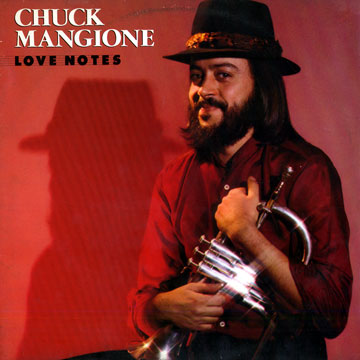
Love Notes has a cool and subdued feel, even for Mangione. But its charm is a sublimely clear tension roiling just beneath the surface that erupts in moments like the bright and sudden resurgences of mysterioso theme in "No Problem." I love the big and squibbly tone of Mangione's flugelhorn, and slippery technique that puts a human stamp on a style of jazz that too often gains marketability at the expense of character. During "No Problem," Mangione's minimal statements and restatements come and go over a funky vamp that recalls Miles Davis, weaving in and out of the choruses by Chris Vadala, a presence lurking in the eaves. The solos by Vidala and Peter Harris are excellent, mixing a clear appreciation of bop that stays close to the tune and deep in the groove. "Memories of Scirocco" is an evocative, songlike standout, combining bluesy inclinations with a subtly Latin flavor. Vadala breaks out the soprano midway and gets in some short, fiery licks that make the album worth having. "To the 80's" comes under fire of finger pops but retains an appeal for the classics with a melody that wouldn't be out of place on a Sonny Clark or Cliff Jordan date. Lastly, the title track is a wistful, smoldering ballad that closes the proceedings thoughtfully, dressed delicately by Vadala and Mangione.

Monday, April 29, 2013

96. Eric Dolphy / Conversations (1963)

The first side of this LP contains loosely swinging and glittering interpretations of two tunes ("Jitterbug Waltz" and "Musical Matador") that are, upon first impression, standard enough. But in Dolphy's hands they are things transmuted: multiform, elastic musical caricatures, elating and jubiliant. They are filled with evocative solos by Dolphy and feature tantalizing interplay with his group. Bobby Hutcherson paints the walls with thick chords and his two independently minded mallets seem to dance in circles while Dolphy ambulates on whichever instrument in the foreground. While the second side contains a shade of what colors the first, it is largely a different, darker and more serious, affair. Still rooted deeply in traditional material and reverently anchored to its origins, the music of Side Two seeks progress in the opposite direction. Like Dolphy's solo extemporizing of "Love Me," where his phrases adopt the cadence and tonality of the human voice and the alto literally speaks. In an impassioned conversation between two lovers (I think, but who knows?), he blows figures that invoke the ballad's humanity: blind, animalistic and primal sounds of raw feelings. It is beautiful but also adeptly cerebral, setting the stage for the centerpiece to come, "Alone Together." This is a reaching, expressionistic and inherently modern synthesis of traditional jazz and contemporary art music. Together with  The Iron Man (recorded during the same sessions and itself another under-appreciated slab of Dolphy alchemy) the two records play like notecards to Dolphy's thesis presented on Out to Lunch. The final 13-minute piece creeps along just Davis and Dolphy, capriciously turning corners and building up others in its wake, as if trying to lose an unseen pursuer. With the preponderance of university and public radio jazz programs, this octet needs more attention. Airplay, airplay! It's like a Dolphy codex, a smaller, more manageable prototype of the brilliance that was to come.

Thursday, April 25, 2013

92. Hank Mobley / A Slice of the Top (1966)

I just picked up this 1966 session by Hank Mobley and it's an odd one. Mobley is featured in the midst of several other interesting young players: McCoy Tyner does piano, Reggie Workman on bass and Billy Higgins on drums --  a good rhythm section of highly individualistic voices, plus Lee Morgan, Kiane Zawadi, Howard Johnson, and James Spaulding. The record is odd for choice of instrumentation, containing euphonium and tuba in addition to tenor, flute, and alto sax. Arrangements by Duke Pearson try to give order to this motley bunch but I can't help feeling that that the whole thing is a little awkward. It's a quartet (or quintet), that looks to be struggling to accommodate the extra pieces in a way that is relevant. At times the octet plods along like two people walking in the same pair of pants, instead of swinging in a tight but dangerously crowded arrangement, as demonstrated by similarly orchestrated groups of Charles Mingus or Thelonious Monk. I'll have to keep listening and I get the keen feeling that this one will grow on me. Look out!

Tuesday, April 23, 2013

90. Frank Morgan and George Cables / Double image (1986)
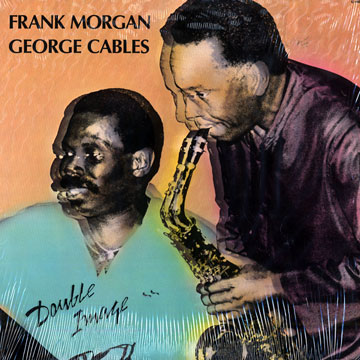
Another nice disc in Frank Morgan's comeback, and definitely something for the shelf. These two musicians are quite a pair. If a trio is less complicated and gives the leader greater clarity and flexibility than a quartet, then a duo takes that rationale to the next level. This album is aptly titled and features Morgan and Cables almost as sympathetic col-leaders. I'd love to hear Morgan's memories of the session. His alto is characteristically expressive. Together with Cables at the piano, they work through an interesting set list. I say it's interesting because there's only two chestnuts: "All the Things You Are" and "After You've Gone," which are quite good. The rest of the record is mixed of more recent stuff and a few originals. On the first side they do a really nice interpretation of Wayne Shorter's "Virgo" (sound the bias alarm, that's one of my favorite tunes) and "Blues for Rosalinda," which is a blues written by Morgan. Bop-inflected blues are his forte, complete with lightning-fast flurries of Birdlike chromaticity. In this regard, I am struck by how similar Morgan and Cables can be. Their choruses are saturated with the mood and use dynamics wisely, before flying up the registers in deftly fingered runs of dazzling acuity. The record closes with a meditative version of Miles' "Blue in Green," but not before Cables has a serious workout in his tune, "I Told You So," which you have to hear to appreciate. Seriously! It might be out of print, but if you can find a copy, buy it now.

Tuesday, April 9, 2013

76. Nat Adderley Quintet / Blue Autumn (1983)

Recorded live at the Keystone, 1983. The quintet is Nat Adderley (c), Sonny Fortune (as), Larry Miller (p), Walter Booker (b), and Jimmy Cobb (d). There's a lot going on in this tribute, and it's a bit of a mixed bag. While Cannonball isn't in attendance, it's not always obvious with Sonny Fortune blowing alto, especially on the smoldering "For Duke and Cannon." That channel is again fulfilled by the last number, which is Willis' rollicking "Tallahassee Kid." And the band pays further homage with "Book's Bossa" in the middle of the set, a form popularized by Cannonball. Booker, Cobb and Willis are like a band unto themselves, working closely while Nat haunts the wings, shouting his encouragement. He flies in and out where needed in his characteristically bright and broad tone, especially in "Fifth Labor of Hercules," wildly shaping and reshaping themes before putting it all back in the box at the end. These performances don't just showcase the soloists, though. Like any Adderley band, it's a celebration of a band, and in this case, a really good band. 

Wednesday, March 6, 2013

52. Gerry Mulligan Meets Johnny Hodges (1959)

Once upon a time, Verve (and the other labels, too) did a handful of records where one player "meets" another. These albums are like fantasy baseball for jazz. Some are really good, while others start and finish without really accomplishing anything. This time it clicks. Together, Mulligan and Hodges do a smooth and balanced set comprised of six originals, three from each. On Side 1, Mulligan's "Bunny" and the self-descriptive "What's the Rush?" set the mood, before moving into the swank, bluesy territory of Hodges' "Back Beat" and "What It's All About." Claude Williamson, Buddy Clark and Mel Lewis are the rhythm section, and are good at keying in on what the leaders are doing. Sonically, the saxes are a sweet blend with Claude Williamson and the carefully considered bass lines of Buddy Clark. When Mulligan and Hodges take choruses, the one will start developing where the other left off. There's no requirement for this, it's just good artistry. So instead of going in two personal directions with the rhythm section plodding in tow, Mulligan and Hodges make the album a cohesive and jointly constructed product. No surprises musically speaking, nothing groundbreaking, no one trying to bring down the roof. But does there need to be? It's just really good jazz from five great musicians.

Wednesday, February 27, 2013

45. Cannonball Adderley / Somethin' Else (1958)

I listen to this at least once a month, an album that is still fresh so many years after it was made, and a bona fide classic by many accounts. Like Kind of Blue, if I had to, I could hum the whole thing from memory. Their flavors are similar in more ways than one, yet the two records aren't really anything alike. But here it certainly feels like Miles is the leader. The patient tempos, arrangement style, and selections all speak to Davis' direction. He even takes the first choruses. The drum chair is Art Blakey this time, with Hank Jones on piano and Sam on bass. Like Kind of Blue, when Davis goes first, it gives Adderley some lines to think about, propelling him into new areas. Davis' own choruses are a mixture of pensive statements through the mute, or beautifully full-bodied open horn. Listen to Davis and Adderley trading licks on brother Nat's "Blues for Daddy-O," the smokey noir of "Autumn Leaves" or doing call and response on the Davis penned title track. Art Blakey was the perfect choice as drummer, and assertively swings the procession with his snare and hi hat, while Hank and Sam work closely tying up the other end. The mood of "Autumn Leaves" is largely created by the good work of Hank Jones, which never seems to end. Together these songs are a remarkable synthesis of talent and chemistry that's one of the best enduring works of jazz.

Saturday, February 16, 2013

36. Henry Threadgill Sextett / Rag, Bush and All (1989)

Mr. Threadgill turns his attention to the possibilities of composing for a jazz sextet, laying aside his penchant for world percussion and other unconventional orchestration. There aren't any frame drums and you won't find an oud, but between Threadgill's bass flute, the bass trombone (Bill Lowe's sole obligation), string bass, cello, and flugelhorn, the instrumental colors are focused in the lower ranges. Add two drummers and shake, and the recipe really works -- bright splashes from Threadgill's alto and Ted Daniels' cornet create a high flavor that is joined by Diedre Murry, whose free explorations on the cello wouldn't sound out of place with Henry Cow. Fred Hopkins, no stranger to interplay with Murry or Threadgill, was always a creative improviser, and uses the full range of the instrument, playing so percussively that you'd think he was a percussionist himself. Threadgill's abilities as composer and arranger are ever apparent, playfully alternating between snatches of melody and bumpy sections of turbulent rhythmic counterpoint. When the soloists open up in later sections of "The Devil is on the Loose and Dancin' with a Monkey," maybe it's the horn and twin drummers, but the music feels a smidge like that of the second Miles Davis Quintet. And in the sections surrounding Threadgill's chorus in "Sweet Holy Rag," the drums and winds play slightly out of phase and recall effect of the opening track on Davis' Nefertiti, that of an unsettling and self-propelled whole that creeps along like a caterpillar and demands the ear's attention. During collective improvisations, the musicians have their ears wide open, and the product is a busy and tantalizing melee of interwoven phrases and meters that step above one person simply jumping into line behind the next.  "Gift" is the shortest piece on the record, a beautifully dirge-like spell of bowed strings, chimes, and arranged winds that is overshadowed by the 12-minute tempests on either side of it. Yet again I listen to an album like this one with such interesting compositions and wish it was available to new generations of jazz composers and musicians, but shake my head in awe of the fact that it has lapsed out of print. There are numerous groups in modern jazz that could adapt these tunes nicely.

Monday, January 28, 2013

18. Nancy Wilson / Nancy Wilson & Cannonball Adderley (1962)

Wilson appears with Cannonball and brother Nat, singing six of 11 selections. The remaining instrumentals are the stock and trade of the Cannonball Adderley Quintet, a group that prospered playing hard bop with a heavy helping of blues and soul. The addition of a vocalist produces a velvety sophistication that is very appealing. Wilson's songs are dustier selections that depart somewhat from standard fare and make a cracking good program. Most importantly, the chemistry between Wilson and the quintet really cooks. Nat uses the mute to good effect, augmenting his brassy tone with an even more strident edge ("Never Say Yes"), while Cannonball tears through some hot leads of his own on (like "Teaneck" and "Unit 7"). Wilson seems right at home in this setting, her voice like just another instrument in the front line. She is gifted with an expressive range, as in "(I'm Afraid) the Masquerade is Over" where she quietly laments her blues with Zawinul tinkling in the background, ultimately breaking into the next register, climaxing, and bringing the song to a thunderous close. Wow.

Saturday, January 26, 2013

16. Gerry Mulligan & Paul Desmond / Quartet (1957)

The story in the notes has it that one night, Mulligan sat in with Brubeck's band and after they hit it off so well, Mulligan and Desmond decided to do a record together. The resulting collaboration is that of two intensely lyrical players. The album proceeds like a conversation in thoughtful melodic phrases, and the magic is all in the melody. We get a few contrafacts (like Desmond's "Battle Hymn of the Republican" a reworking of "Tea for Two"), some mutual favorites (like the exquisite "Body and Soul"), and a lot of improvised counterpoint between Mulligan and Desmond. It's exciting how well the pieces fit together and the tone of the baritone mixed with the alto sounds really sweet. Dave Bailey and Joe Benjamin do the rhythm, same as when Chet Baker was in Desmond's chair. If you listen to those recordings, you can hear the remarkable difference that chemistry makes. The two groups don't sound as similar as one might expect. The Mulligan-Desmond partnership produced a few "sequels" which are very good, but I think this first outing captured their intentions the best.  

15. Nat Adderley / Introducing Nat Adderley (1955)

It was released under Nat's name but the Brothers Adderley really split the bill here, including most of the composition credits. It's solid hard bop and sounds a lot like what other New York groups were doing in 1955, but this beautiful example has aged very well. The other three comprising the quintet are Horace Silver, Paul Chambers, and Roy Haynes. Together, they make one of those 'perfect' jazz groups like the classic Coltrane quartet or first Miles Davis quintet. Nat's trumpet work is fresh, brassy and forthright, Cannonball is his usual slippery and blues inflected self, using a combination of Birdlike runs in the higher register with. In fact, both brothers play with a satisfying helping of blues and soul. I listen to the accomplished playing on this disc, tracks like the autobiographical "Two Brothers" or "New Arrivals," or the ballad "I Should Care," and it's easy to see how New York's band leaders and other players took so quickly to the Adderleys right when they arrived, moves which put them on the map for the recording labels.