Recent listening, current
Archived listening, 2013-2016
Showing posts with label blues. Show all posts
Saturday, June 20, 2015
204. Don Cherry / Art Deco (1988)
Credited to Cherry, this session belongs to the same unit that worked together before Cherry, Haden, and Higgins historically joined ranks with Ornette Coleman. It's a beautiful straight set, comprised of cooly executed standards, originals, and several Coleman covers. The quartet is familiar and tight. I haven't listened to much of James Clay's past work, but now I wish I had more of it on hand to explore. His deep, supple lines in "Body and Soul" put a fresh coat on the old song, mixing wry bop phrasing with bursts of unexpected tonal color and bluesy swagger. Cherry takes a rest while Higgins and Haden nimbly sidestep one another before Haden builds a short solo. The ensemble picks up again behind Clay's last chorus and the plaintively emotive outro for solo tenor. Monk's "Bemsha Swing" comes next, where Cherry and Clay get most of the spots, but leave room for Higgins. Higgins, Cherry, and Haden each get time alone on "Passing," "Maffy," and "Folk Medley," quiet, introspective spaces that give listeners a chance to appreciate their individualism. Eight-bars-and-blow gets old, I agree, but these renderings sagely belie that trope with wit, spirit, and a genuine enjoyment for the music Do you love great jazz? Find it, buy it.
Saturday, December 27, 2014
198. Frank Wess / Opus in Swing (1956)
This pianoless quintet led by the flute of Frank Wess also lacks his other instrument, the alto sax. Accordingly, he's in top form whether it's pounding high notes in the blue gloom of "Southern Exposure" or adding harmonic color to the serpentine leads of "Somewhere Over the Rainbow." Also moonlighting from the Basie Band are Eddie Jones and Freddie Green who keep time with Kenny Clarke so tight it's telepathic. The quintet excels in the same music that Basie's bands made famous. Like Basie's, their combo has an undeniable group dynamic, but every man is heard as his own solo artist. Together, they drive the music with one mind, then shine forth as individuals during the moments when one man stands alone. It's impossible to appreciate one quality without noticing the other. Kenny Burrell is notable. Listen to "East Wind." Green trades chording for a more pianolike approach that walks, while Klook keeps time with the cymbals and Wess sketches the heavy mood with dense vibrato. When he lays out, Burrell bursts the seams with bluesy runs and relevant single note phrases that underscore the character of the melody and polish the rhythm. It's choice stuff, a potent brew of Kansas City swing that has been seasoned with the developments of postwar New York.
Tuesday, May 6, 2014
194. Louis Jordan & His Tympany Five / Choo Choo Ch'Boogie (1999)
Choo Choo Ch'Boogie is another terrific compilation of golden era R&B from the ASV/Living Era imprint. Jordan was a versatile vocalist whose act ran the gamut from vaudeville to jump to gut-busting blues. His smooth delivery and expertise with turning a phrase took dancers from cutting figures on the floor to falling down laughing. He was also an altoist with a nimble technique whose reserve of power drew comparisons to Earl Bostic. The set is a good representation of his repertoire from 1940-1947. In crisp audio, it includes famous numbers like his own "Caldonia," "Five Guys Named Moe," or "Let The Good Times Roll." But the playlist also has novelties like the hilarious calypso with Ella Fitzgerald (both ex-Chick Webb), "Stone Cold in de Market" or "What's the Use of Getting Sober (When You're Gonna Get Drunk Again)?" No stranger to the drink whose wife Fleecie twice tried to kill him by stabbing, Jordan sings these with confidence! His blues are followed by his alto, with nary a breath between verse and chorus. "Ration Blues," "Somebody Done Changed The Lock on My Door" and "Ain't that Just Like a Woman," show Jordan working his charm with sly double meaning and steamy intent. Fans of early rock and roll or Chicago blues will appreciate Jordan's work, and this is a fine place to start. Babs Gonzales, Slim Gaillard, King Pleasure, all similar.
Thursday, November 21, 2013
152. Tom Principato / Smokin' (1985)
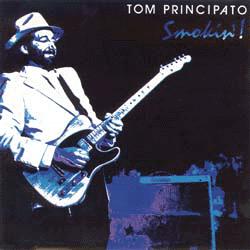
Principato is well known on the East Coast circuit. In the 70s, he made a pair of legendary albums with fellow Tele-wizard Danny Gatton (Blazing Telecasters and More Blazing Telecasters). But outside of the South, his name is more obscure. Principato's nimble, string bending, Fender-driven brand of electric blues combines a stripped down Chcago style with Texas and Southern flavors. Like the discs he did with Gatton (and much of Gatton's work, Tom or no), it draws from all over the blues tradition, a swirling cocktail of jump, boogie, rock, country, and swing. There's a tinge of honky tonk and each lick is rendered with gratuitous twang. Principato's sustain on sweeping string bends gives each note its own zip code. Smokin' is the perfect title. The album cooks on high from the first note until the last. For verse sections, Principato plays riffs close to the nut in a deep, growly sound. He soon flies up the neck in a combination of slick, fluid phrases that are interspersed with chunky bends and exciting slides. "Lipstick, Powder & Paint" continues the twangy blues vibe, likewise "Fish Fry." Harder rocking tracks include Principato's "Talkin' Trash" and the closing "Hard Livin'." Fans of Stevie Ray or any of the usual suspects will find this to be an infectious delight. Be warned: buying one album may lead to buying three or four more...
Thursday, November 14, 2013
148. Fenton Robinson / Somebody Loan Me a Dime (1974)
I like this debut for Alligator a lot because Robinson's guitar and vocals combine much of what I love about Texas, Chicago, jazz, and soul all in one place. It has a pureness, a genuine flavor that is unmistakable, yet it is not adequately described by any one of those styles. It all starts with the vocals and guitar which are backed by a straight ahead band including Bill Heid and Mighty Joe Young. Robinson's voice is a deep baritone, capable of rich emotional detail while its timbre is smooth enough to imply a dimension of gentleness. This distinguishes him from the haughty, barkingly self-assured styles of singers like Muddy Waters and Howlin' Wolf (just saying). And it's a big voice, too. They needed a microphone for the sessions but it's easy to see him singing without one. For "mikeless" cred, he even covers Big Joe Williams' "You Say You're Leaving," and to devastating effect. His unique blues guitar style is evident from the first track, "Somebody Loan Me a Dime." Robinson plays smart licks in a call-and-response style, but draws jazzy patterns from a more colorful pallet than your typical player. The tone is dirty and overdriven, without reverb, and sounds pretty much right from the wire. This is essential for fans of Chicago or Texas blues because it's good for character, and an easy like for fans of Grant Green or anyone with a penchant for soul jazz.
Labels:
1974,
alligator,
bill heid,
bill mcfarland,
blues,
chicago,
cornelius boyson,
dave baldwin,
debut,
elmer brown,
fenton robinson,
guitar,
mighty joe young,
norval hodges,
somebody loan me a dime,
texas,
tony gooden
Wednesday, November 6, 2013
146. Wes Montgomery / Smokin' at the Half Note (1965)
Smokin' is the second collaboration between Montgomery and the Wynton Kelly Trio. They played on a couple of his other albums, too, and they make a solid group. The trio is Kelly, Chambers and Cobb. Having said as much I shouldn't have to say more because the names, let alone the music, practically say it all. I'll listen to anything with these guys. Only two of the five tracks on the original LP are actually live from the venue, "If You Could See Mee Now" and "No Blues." The other three are from (where else?) Van Gelder's studio. It doesn't really matter because both dates are terrific. Our opener "No Blues" pushes 13 minutes in length, marked by Montgomery's fat tone and heavy right hand. It's also an interesting piece as far as Miles covers go, dating from his 'casting around' period before the second great quintet formed up. But getting back to Wes, his melodic constructions in "Unit Seven" are something to marvel at. It's refreshingly cogent jazz thinking, replete with strong musicality and inventive spirit. For both live and studio material, Chambers and Cobb are the bedrock while Kelly is probably the perfect pianist for this group, having both the technical facility and bluesy swagger necessary to enhance the brew. If you want to learn what jazz guitar is all about, this is a good entry point.
Labels:
1965,
blues,
guitar,
hard bop,
jazz,
jimmy cobb,
live,
paul chambers,
quartet,
review,
rhythm and blues,
smokin at the half note,
soul jazz,
wes montgomery,
wynton kelly,
wynton kelly trio
Friday, September 13, 2013
138. Roy Eldridge / The Nifty Cat (1970)
Roy Eldridge as leader? Has the moon come down? He didn't lead much, didn't even record much after 1960, and I wasn't aware of this disc until spotting it at my library. The personnel is interesting. There's Budd Johnson whose skills in arranging, tenor and soprano sax are the perfect fit for Eldridge's brand of jump and small group swing. The bass is by Tommy Bryant, a musician of great skill and style, and one who seems underappreciated today. On drums is perennial session man Oliver Jackson, piano is 'Countalike' Nat Pierce, and perhaps my favorite man on the album is Benny Morton on trombone. His inventory of different sounds and licks is inexhaustible and the 'bone brings a touch of old school class to the proceedings (check him out on the lazy "Jolly Hollis," or "Ball of Fire"). "Cotton" is a deep and stormy blues carried by an appealingly mysterious piano and bass figure. Eldridge sings the humorous blues "Wineola," also getting a nice solo in the tune, and things really cook with Eldridge's "Ball of Fire," filled by a lot of riffing and Eldridge showing off his famous range. The closer is the title track with solid work from everyone. I especially enjoy Eldridge's first solo. There's a good mood throughout the set, and I'm thankful for this disc given how much the trumpeter worked but did not record. It's definitely worth finding.
Saturday, August 31, 2013
129. Hank Jones and Frank Wess / Hank and Frank (2006)
Requiring no introduction, Hank Jones and Frank Wess have one of the best jazz albums of the past 20 years. Aside from Jones and Wess, bassist John Webber (try "You Made a Good Move") guitarist Ilya Lushtak, and drummer Mickey Roker make an appreciable impact, too. This is uber classic jazz with universal appeal. The joy in listening, for me, comes from how together the group is. Playing this music is beyond natural to the co-leaders and on the record, the product of their skills sounds as easy as breathing. Wess doubles on tenor and flute. To make a play on that line about "breathing," try listening to his beautiful lines on ""The Very Thought of You." There is a wide variety of material from blues to bossa nova, and don't miss the four originals by Wess or the tune by Mr. Parker like "Barbados." Best of all, if you can't get enough of Hank and Frank then you can always buy the second volume. Yes, there is a second volume.
Labels:
2006,
blues,
bossa nova,
flute,
frank wess,
hank and frank,
hank jones,
hard bop,
ilya lushtak,
john webber,
lineage,
mickey roker,
piano,
quintet,
review,
tenor sax,
tenor saxophone
Saturday, June 22, 2013
110. Mingus Mingus Mingus Mingus Mingus (1963)
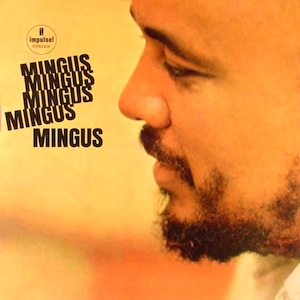
Mingus, the master orchestrator. Mingus the composer. Mingus the performer. He's got so many credits on this album that I marvel at how it doesn't sound one bit overrun by his presence, yet it's distinctly his product. The music swings with a loose and careening vibrancy that is electrified with spontaneity and invention. With just 10 pieces, his arrangements sound as quiet as a quartet or as powerful as a big band. Its performers lend the air of familiarity, dashing in and out of ensemble jams like "Better Get Hit in Yo' Soul" or blending sublimely as in the steamy rendition of "Mood Indigo." Mingus listeners will immediately sense the presence of old friends, because many of the tracks are new treatments of preexisting Mingus tunes. I'll let you figure what is what. As for soloists, I really enjoy Charlie Mariano (bias alert, I just got Blue Camel so I'm on a bit of a bender) or the shambling Walter Perkins on drums.
Saturday, May 18, 2013
101. Buddy Tate / The Texas Twister (1975)
Tate was with Basie in the early days but has many dates to his own name and was a leader whose career lasted well into the '90s. His sound on The Texas Twister is large and assured, with occasional wailing outbursts, but it's less assertive than some other horns associated with the Count, like Eddie Davis or Illinois Jacquet. And I like that, too. But the music on Twister swings close to the Basie band in more ways than
one. To start with, there's the addition of Paul Quinchette on tenor. The first number "The Texas Twister" is an uptempo 32-bar intro
to the proceedings that showcases both horns (Tate on the left,
Quinchette on the right), and has game piano work by Cliff Smalls. I thought it could easily go a few more rounds but the leaders opted to be concise and it's off to the next tune once the front line gets back to the head. Further in the Basie vein of blues-based small group swing, we also get Tate singing a la Jimmy Rushing in several cuts, including two installments of "Take Me Back Baby" that showcase Tate's sweet vocal and the impact of opposed horns. The arrangements feature some expected dueling, a mature and more relaxed but no less exciting form of the stylistic counterpoint from the old days. It happens between Tate and Cliff Smalls, too, as in "Talk of the Town." Tate opens the tune in a whispering voice that is soon hammered by Smalls' angular piano statements directly on top of the beat. Tate returns to state his piece every bit as eloquently and reserved as before, endowing the ballad with some very poignant sensibilities. Tate also plays clarinet, on "Chicago" and the closer "Gee Baby," adding further depth to the quintet. It's a good session and thoroughly enjoyable listen with a few hidden surprises.
Labels:
1975,
blues,
buddy tate,
cliff smalls,
jackie williams,
jazz,
major holley,
new world,
paul quinchette,
quintet,
review,
rhythm and blues,
swing,
the texas twister,
vocal,
vocalist
Friday, April 26, 2013
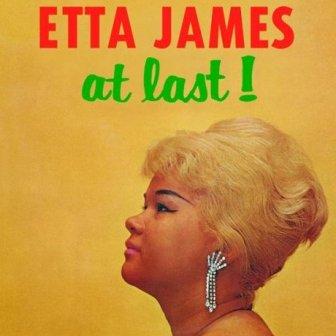
93. Etta James / At Last! (1961)
Labels:
1961,
argo,
blues,
chess,
chicago,
etta james,
mca,
pop,
rhythm and blues,
riley hampton,
soul,
vocal,
vocalist,
willie dixon
Monday, April 15, 2013
82. Eddie "Lochjaw" Davis Cookbook, Vol. 2 (1958)
The second installment of the Jaws Cookbook is a hot and steamy affair, steeped in the deep blues magic of the proprietor and soulful organ fury of Shirley Scott. She really works those draw bars! The intensity pulses and swells when Jaws takes a chorus, and the floodgates really open when he yields the floor to her. The Side 1 opener "The Rev" and followup "Stardust" really benefit from this treatment. As if to cool things off, or reel them back in, Jaws occasionally hands it over to Jerome Richardson on flute, which adds an additional texture that sounds as natural as the organ and tenor. After the wait, "Skillet" brings out the uptempo mode. Again Arthur Edgehill and George Duvivier take timekeeping duties, and their performances are the cord that hold the whole thing together, playing tightly and concisely . "The Broilers" raises the roof in Basie fashion, Jaws and Scott blowing huge choruses that seem to beg for the brass of a big band. The OJC CD includes "Willow Weep for Me," previously released on the Prestige sampler, The Soul Jazz Giants. Nice disc, overall.
Thursday, March 28, 2013
64. Artie Shaw / The Last Recording: Rare and Unreleased (1954)
This two-disc set is a wonder. It includes the final recorded performances of the gifted clarinet. Why pack it in? According to Shaw, the demands of perfectionism were just too much to continue. With Hank Jones, Joe Roland, Irv Kluger, and either Joe Puma or Tal Farlow on guitar, Shaw's last Gramercy Five makes wonderful music. On clarinet, he's such a colorful player, using a wide range of dynamics to swing hard ("Sad Sack") or put impart special sentimentality to the ballads ("My Funny Valentine"). His licks and interpretations of the melodies are always engaging and inventive. His style touches on elements of dixieland, blues, swing, classical, and even exotica or novelty music, while fully embracing none of those styles. When someone takes a chorus, listen closely to Shaw and Jones, who can't resist entertaining each other with Third Streamish inclinations and suggesting the quotations they happen upon, a bit like Brubeck and Desmond (as in "Pied Piper"). Such playfully eclectic musical behavior should be expected from Shaw, who believed it was his responsibility to bring out areas of a composition not defined by the composer, to interpret and arrange life into the music. Thus while many are well served by relaxing and enjoying what they hear, a lucky few will be rewarded by listening to what Shaw has constructed... and off the cuff, at that.
Labels:
1954,
artie shaw,
blues,
clarinet,
gramercy five,
hank jones,
irv kluger,
jazz,
joe puma,
joe roland,
last recordings,
music masters,
quintet,
rare and unreleased,
review,
swing,
tal farlow,
third stream
Monday, March 25, 2013
61. Grant Green / Grant's First Stand (1961)
Green's debut for Blue Note, his first disc as leader, frames him in a swinging organ trio with Baby Face Wilette and Ben Dixon. It's a good crew to support Green, two players who are very much in the same frame of mind. It's not a crowded sound, although everyone is busy, but when one member takes a chorus, the inherently sparse nature of the trio puts the soloist front and center for your enjoyment. Wilette's organ gives bluesy grooves like "Miss Anne's Tempo" or "Blues for Willarene" a heartier texture and emotional urgency that Green balances with velvety smooth and bop influenced melodic runs on the guitar. He's not a chord freak, so his music has a different feel than some other jazz guitarists. Dixon is very active, fleshing out the trio's overall sound and making his presence loud and clear. He's a great drummer who is no stranger to the format, and does an admirable job here, his affinity for the work of Art Blakey rumbling loud and clear. While it isn't really fair to call a guy's first record his best, especially when he made so many others after it, this album may be just that good.
Tuesday, March 19, 2013
56. Count Basie / Count Basie at Newport (1957)
This set is a giant. Basie already has a power packed orchestra with Thad Jones, Frank Foster, Frank Wess, Sonny Payne, Freddie Greene, and a handful of others. But he invites superstars from his past bands to join them. Lester Young, Jimmy Rushing, Jo Jones, Joe Williams, and Illinois Jacquet all have a few moments to play with the current band. It's powerful music that is energetic, exciting, inspired, and obviously enjoyed by everyone on the stand and in the crowd. The tracks with Basie's reformed orchestra -- sleek and modern, young but steeped in swing and the blues -- are a nice contrast with older, swing-based musicians like Lester doing "Polka Dots and Moonbeams" followed by a frenetic "Lester Leaps In" and Jimmy Rushing singing the jaw dropping blues "Sent for You Yesterday and Here You Come Today." Rushing's gigantic voice demonstrates what it takes in terms of volume and stage presence to stand out in front of the most motley orchestra in the business. The old chemistry is still there, and this album, like Duke's record from Newport '56, demonstrates that big band wasn't dead yet.
Labels:
1957,
big band,
blues,
count basie,
count basie at newport,
frank foster,
frank wess,
jazz,
jimmy rushing,
jo jones,
joe williams,
kansas city,
lester young,
review,
swing,
thad jones,
verve
Saturday, March 2, 2013
48. Don Wilkerson / Complete Blue Note Sessions (2001)
A nice release from Blue Note, culling tracks from the four LPs they released for Wilkerson from 1960-63. It's a double disc and the remastered sound is on par with the other excellent Blue Note re-releases. Wilkerson was a tenor who worked with a variety of artists including Ray Charles and Cannonball Adderley (no surprise) and was at home playing blues-based and danceable soul jazz that was easily related to ("Senorita Eula," "Drawin' A Tip,"). With a sophisticated sense of melodic variation and good use of legato dynamics, he steps beyond the prereqs for soul jazz and creates a unique blend that rewards if you listen closely. He's also fond of repeated, motivic phrases that carry the groove. The bands he plays with, especially the combo with Graham Greene, know right where he's at, and turn up the heat when he finishes a chorus. Wilkerson's "San Antonio Rose" (with a cooking solo by Greene) stands out to as a particular good take, so does the interesting "Pigeon Peas" which has me listening a few times over to catch what Wilkerson is doing with the drums. It's fine stuff, top to bottom.
Wednesday, February 27, 2013
45. Cannonball Adderley / Somethin' Else (1958)
I listen to this at least once a month, an album that is still fresh so many years after it was made, and a bona fide classic by many accounts. Like Kind of Blue, if I had to, I could hum the whole thing from memory. Their flavors are similar in more ways than one, yet the two records aren't really anything alike. But here it certainly feels like Miles is the leader. The patient tempos, arrangement style, and selections all speak to Davis' direction. He even takes the first choruses. The drum chair is Art Blakey this time, with Hank Jones on piano and Sam on bass. Like Kind of Blue, when Davis goes first, it gives Adderley some lines to think about, propelling him into new areas. Davis' own choruses are a mixture of pensive statements through the mute, or beautifully full-bodied open horn. Listen to Davis and Adderley trading licks on brother Nat's "Blues for Daddy-O," the smokey noir of "Autumn Leaves" or doing call and response on the Davis penned title track. Art Blakey was the perfect choice as drummer, and assertively swings the procession with his snare and hi hat, while Hank and Sam work closely tying up the other end. The mood of "Autumn Leaves" is largely created by the good work of Hank Jones, which never seems to end. Together these songs are a remarkable synthesis of talent and chemistry that's one of the best enduring works of jazz.
Thursday, February 14, 2013
34. Milt Jackson & John Coltrane / Bags and Trane (1961)
Released after My Favorite Things, Giant Steps, and Coltrane Jazz, this collaboration was recorded in 1959, and was actually the first album to be recorded by Coltrane on his new contract with Atlantic. It was sensible to wait until '61 to release it. Because while it's very good music, blues and standards by a quintet, and the exchange of ideas between Trane and Bags during improvisations makes it a few cuts above what it could be, given their prior associations, this album doesn't make the same splash. He wasn't their guy anymore, so you could view it as a safe play for Atlantic while Coltrane was en route to Impulse. I don't understand why Atlantic altered the sequence of the original LP when they released the CD, but they did. In this case, I don't think it matters. The Bags-penned blues numbers like "Late Late Blues" and "Blues Legacy" are my favorites. It seems that no matter where they were in the music, the blues were never very far behind either player, and that's a good thing.
Labels:
1959,
1961,
album,
atlantic,
bags,
bags and trane,
blues,
john coltrane,
milt jackson,
milt jackson and john coltrane,
prestige,
quintet,
tenor sax,
tenor saxophone,
trane,
vibes,
vibraphone
Monday, February 11, 2013
31. Wes Montgomery / Boss Guitar (1963)
This is a really slick album by the Wes Montgomery trio, one of four recorded with organist Melvin Rhyne. Montgomery takes most of the leads, although Rhyne does get a few. When he does, he doesn't use the draw bars much, although he plays a great bass accompaniment on the pedals and occasionally uses the bars while interplaying with Jimmy Cobb or comping. So it's pretty much Wes Montgomery, right up front, all the time. Most of the tunes are standards except for two. It's accessible music of the funky and soulful variety that Wes purveyed across his career. The music is so smooth that it's almost easy to ignore if Montgomery wasn't so good, and Jimmy Cobb certainly keeps listeners awake on the drum kit. He does the octave picking a little bit, but does more blues-based riffing and plays some very spontaneous figures in the upper register that remind me of alto saxophone technique. "Besame Mucho" is the standout mark of a seasoned professional and Montgomery's own "The Trick Bag" really heats up. From the looks of things, I think Rhyne and Cobb like "Trick Bag," too.
Labels:
1963,
album,
blues,
boss guitar,
guitar,
jazz,
jimmy cobb,
melvin rhyne,
organ,
review,
riverside,
soul jazz,
trio,
wes montgomery
Thursday, January 24, 2013
13. Hank Mobley / Soul Station (1960)
The title Soul Station sounds like something out of the Jimmy Smith catalog, doesn't it? But it isn't soul jazz. Hank Mobley did not lead his own group often, and this statement of purpose really pops him out. Art Blakey, known to go full bore with the hard sticks, is more restrained and along with Chambers, carries a very laid back but swinging groove for Mobley to steer from the top. Wynton Kelly spreads out behind Mobley, playing a lush accompaniment of chords and his own bluesy licks. Mobley's technique is at the fore of the group, subtly kneading and stretching the signatures like dough. "Spirit Feelin's" has some good playing from everyone, including a short but terrific solo from Blakey. It is followed by the title track, a smoking slow blues jam that reminds me a little bit of Johnny Griffin's "Satin Wrap." But Mobley's patient phrasing and rhythmical construction are wholly different from Griffin's. The album closes with "If I Should Lose You," a standard that is treated similarly to the opener.
Subscribe to:
Posts (Atom)
.jpg)
