Recent listening, current
Archived listening, 2013-2016
Showing posts with label soprano sax. Show all posts
Wednesday, January 1, 2014
164. Ernie Watts Quartet / Ernie Watts Quartet (1987)
This self-titled LP featuring Watts as the chief soloist is pretty hard to fault. Watts' craft and professionalism are what's on display here, and they are impressive to say the least. Watts is a diversely talented musician capable of playing with ease in a dizzying assortment of styles and settings, and this album does well to demonstrate his chops on tenor, alto, and soprano saxes while playing pop, hard bop, and the blues. By 1987, he had done extensive session work in Los Angeles that refined his technique from a streetwise hard bop sound to the razor edge of instinct and technical facility required for more specific demands as a hired horn. Side 1 opens with "Language of the Heart," a smooth pop tune that never strays far from the melody. But the next track is a mean slice of hard bop called "Continental Blues." The dramatic juxtaposition of these styles proclaims YES, this man will do both! Here and elsewhere, Watts switches from heavy lines in a tough tone to effervescent double-time eruptions of verbosity that probe the harmonic architecture of the changes. Even when he's on alto, Watts reminds me a lot of John Coltrane. I appreciate the group's thoughtful rendition of "Body and Soul," which is dedicated to Mr. Coltrane, and at 6:02 is also the longest track on the record. Pat Coil, whether driving the rhythm, comping, or interplaying intelligently with Watts, wins the prize for underrated sideman of the hour. Often, in the more predictable spots, his piano maintains my interest when the melody from Watts just isn't enough. Timekeeping Leatherbarrow and Dibartolo are also notable.
Sunday, September 8, 2013
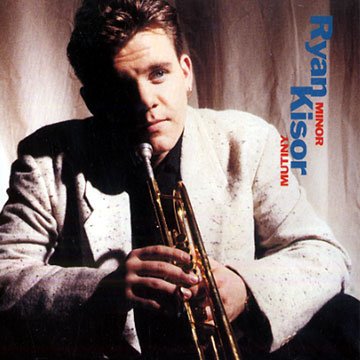
135. Ryan Kisor / Minor Mutiny (1992)
The cover, which apes Chet Baker, first grabbed me. I saw a young guy, similar features, sport coat, trumpet, and dramatic lighting. I thought, okay, let's try this out. The second thing, first hearing then reading, was the personnel including Ravi Coltrane, Lonnie Plaxico, Michael Cain, and either Jeff Siegel or producer Jack DeJohnette on drums. It's a sweet debut, a sort of double debut if you count Siegel. I was immediately swept up by the beautifully lonesome "One For Miles," which evokes Davis' "Basin Street Blues" from Seven Steps to Heaven. Kisor pays through the mute and it's a spot on, glowing tribute. My reaction was, "If this guy doesn't sound like Miles!" Yet in spite of Kisor's obvious reverence for the master, the performance isn't cliche and the style is all his own. Then there's the work by Ravi Coltrane on tenor and soprano. His tone and intonation on soprano are exemplary and the choruses take possibly the most unique voice in the group. Juxtaposition of drummers Siegel and DeJohnette do not ruin the continuity. Siegel is fantastic, playing responsively in intricate patterns all around the beat, and doesn't suffer for following an experienced musician like DeJohnette. You'll find that Siegel's playing even starts the melancholy album (there is some great mood on this disc), and he is only supplanted by DeJohnette on two tracks.
Labels:
1992,
columbia,
debut,
jack dejohnette,
jeff siegel,
lonnie plaxico,
michael cain,
minor mutiny,
quintet,
ravi coltrane,
ryan kisor,
soprano sax,
tenor sax,
tenor saxophone,
tribute,
trumpet
Tuesday, July 16, 2013
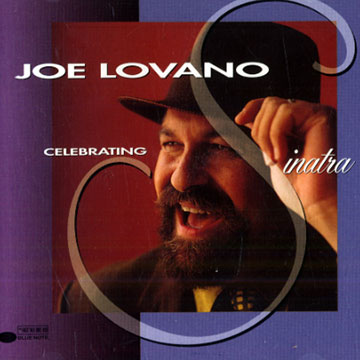
115. Joe Lovano / Celebrating Sinatra (1997)
Joe Lovano here performs his version of the Great American Songbook by interpreting one of his more powerful muses, Frank Sinatra. I read Lovano's single page in the accompanying booklet and I can't disagree with him. Sinatra was consistently great for the duration of his career, and exerted a powerful influence on succeeding generations of musicians. The effect continues and this 1997 album is a prime example. As Lovano and crew cut through classics like "I've Got the World on a String," "In Other Words," or "Someone to Watch Over Me," they meld modern sensibilities and at least five decades of stylistic development in jazz with Sinatra's timeless swing. It's a natural setting for Lovano, like balm for the soul. He grew up with Frankie playing all around him, and it immediately conjures memories of his home and family, notably his Aunt Rose Verzi. A Sinatra devotee who saw him in person hundreds of times, she sounds pretty cool! Lovano was certainly taken by his auntie. His ballad work bubbles with ideas and earnest sentiment. The arrangements and orchestration aren't just tasteful, they're clever, too, as in the aforementioned "String" where Lovano weaves in and out with the cello to make a play on the lyrics in the song. Or the wild and nasty group sections culminating at the end of "One for My Baby." During "South of the Border," Lovano lets George Mraz have the first chorus, giving a new context for Lovano's solo to emerge in, instead of jumping right off the melody. The result is really fresh. Every track is as good as the next, so hats off to Joe Lovano for indulging his passion and recording this set of Sinatra staples. As with other Lovano records, it stands up heartily to repeat listening.
Thursday, March 7, 2013
53. Alice Coltrane / Journey in Satchidananda (1970)
Alice plays harp and piano, with help from two lineups of New Jazz practitioners (one band for the studio, and one recorded at the Village Vanguard). Coltrane's harp is wild and free, and the diverse instruments of her band make a colorful backdrop of shifting textures and rich tonalities. Pharoah Sanders' tenor and soprano saxes are played with an ear toward Middle Eastern or north African themes, but no on. If you've ever questioned or been curious about the influence of the former on the latter, this as close to a living, breathing side-by-side comparison that you're ever going to get. The liner says something about Coltrane's association with Swami Satchidananda and his doctrine of universal love. While we listen, we are invited to envision ourselves floating on his love for humanity. I'm not sure I prefer to do that over listening to how the musicians choose to stretch out and cooperatively interpret music that is entirely modal in form. I always hear something new, especially from McBee.
Subscribe to:
Posts (Atom)