Recent listening, current
Archived listening, 2013-2016
Showing posts with label rca. Show all posts
Thursday, February 20, 2014
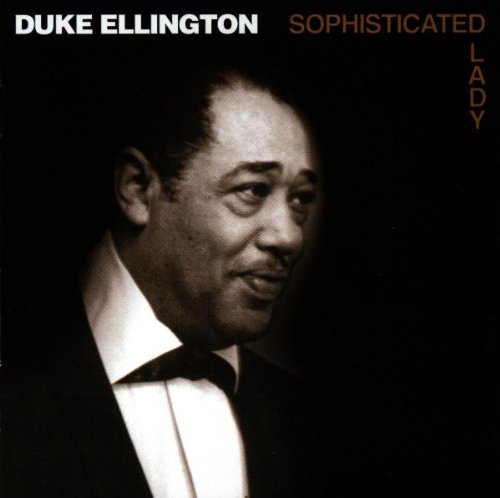
186. Duke Ellington / Sophisticated Lady (1996)
Sophisticated Lady is another cull from the legendary RCA sessions. It's a good one. Selections from the period also appear on the three-disc set, Never No Lament. But that, or Bluebird's Blanton-Webster box that spawned them all, are going to make one hell of a dent in your bankroll. On the other hand, you can buy Sophisticated Lady over at Amazon for the princely sum of one penny. I know, you have enough Ellington at home and will forgo this stage in the endless saga of repackaged jazz music. Still, a penny? I'll wait here while you go and get one. Back already? When it arrives in the mail, you'll appreciate the diversity of material and engaging sequence. Duke's best pieces are present, and there is a fair mixture of instrumental and vocal music. With Blanton at the wheel, it swings like a hammock. There is magic from start to finish. Like Kay Davis' electrifying vocal that makes "Mood Indigo," followed by Webster's whispering tenor. Tricky Sam Nanton's trombone should get you "In a Sentimental Mood," but beware the three sirens telling you "It Don't Mean a Thing if it ain't Got that Swing" (Joya Sherrill, Kay Davis, Marie Ellingon). The affair heats up to a frenzy courtesy of Jimmy B. Then Ray Nance sings "Just Squeeze Me," Al Hibbler chimes in on "Solitude"... Nothing to shake a stick at here, this is real music. This is what it all means. This is "it."
Labels:
1940,
1941,
1942,
1945,
1946,
1996,
al hibbler,
ben webster,
big band,
compilation,
duke ellington,
jimmy blanton,
joya sherrill,
kay davis,
ray nance,
rca,
swing,
victor,
vocal,
vocalist
Saturday, October 19, 2013
143. Don Braden / The Voice of the Saxophone (1997)
Braden plays a big sounding tenor and does an admirable job arranging for his octet (which is occasionally a quartet, as with "After the Rain"). He carries most of the groove but there's also Vincent Herring, Randy Brecker, Frank Lacy and Hamiett Bluiett. The arrangements are nimble, often carried by a piano continuo, and they balance the group's massed power with spaces that feature the soloists. It's clever, and I'll forget that I'm listening to an octet before a big blast reminds me to count the pieces. The opener is Hank Mobley's swinging "Soul Station." There's a lot of good hard bop in the playlist, like Shorter's "See No Evil," or Jimmy Heath's "Voice of the Saxophone." It all sounds fresh. There's also Sam Rivers' tricky "Point of Many Returns" and some solid originals by Braden like "The Dust Kicker" and "Cozy," (nice solo by Brecker here). "Monk's Hat," which is the tune we all know as the theme from the Cosby Show, is appreciated but might be more appropriately placed at the end of the album. Kitsch aside, I like that last one well enough because it reminds me of watching Cosby! Hats off to Braden and crew for an outing that's enjoyable, danceable, and even holds a few surprises.
Labels:
1997,
cecil brooks iii,
darrell grant,
don braden,
dwayne burno,
frank lacy,
hamiet bluiett,
hard bop,
jazz,
octet,
randy brecker,
rca,
review,
tenor sax,
tenor saxophone,
the voice of the saxophone,
vincent herring
Tuesday, July 9, 2013
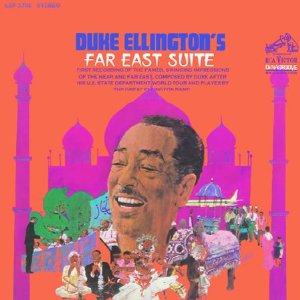
113. Duke Ellington / Far East Suite (1967)
Last month, I rolled down the windows of my car after working a 12-hour day, twisted the cap off an ice cold Virgil's Orange Cream soda, and enjoyed the drive
home while listening to this record. The Far East Suite is one of Duke's last recorded works, and one whose material might sport the familiar names and faces of orchestras past but its compositions have a unique flavor among others in the Duke canon. It's been on regular rotation at my house since that evening with the soda pop. Between the grooves are yards of punchy counterpoint between reeds and brass, and some of Johnny Hodges' sweetest work on wax ("Isfahan"). And of course we are treated to equally fine work by the likes of Cootie Williams, Cat Anderson, Russell Procope, Harry Carney, et al. The recording is memorable throughout thanks to Duke's direction of the sublimely cohesive band. It is nice to hear Duke melding his percussive piano blues with sophisticated orchestral textures and touches of middle eastern music or orientalism in tracks like "Mount Harissa," "Ad Lib on Nippon" or the opening "Tourist Point of View." I was swept up by the tidal wave of sound, which is what usually happens when I listen to Mr. Ellington.
Labels:
1967,
big band,
bluebird,
cootie williams,
duke ellington,
far east suite,
harry carney,
isfahan,
jazz,
johnny hodges,
orientalism,
paul gonsalves,
piano,
rca,
review,
russell procope
Saturday, July 6, 2013
112. Paul Desmond / Take Ten (1963)
If you can't get enough of "Take Five," then Take Ten is the album for you. It's one of several excellent slabs made during Desmond's many quartet sessions for RCA Victor. The band is Jim Hall on guitar, a moonlighting Connie Kay on drums and Gene Cherico on bass. Fellow Brubeckian Eugene Wright subs for Cherico on "Take Ten," adding an extra dimension of conceptual continuity to this 10/8 reworking of its famous counterpart. It starts with a familiar vamp that is reminiscent of a studio orchestra trying to avoid paying royalties for the genuine article. But then Desmond starts in on a deep and bluesy riff, finding new territory inside of an old melody. He blows these long and contemplative notes that explore the tonal color of the mode and remind me, in a very limited sense, of later work by Jackie McLean or John Gilmore. It's a treat, especially when he decides to hold on for just a bit longer and sustains the phrase with some vibrato. Proceedings quickly change the course toward Desmond's passion for bossa nova. In spite of an American burnout on the form, Desmond was one of its stalwart practitioners, and originals like "El Prince," "Embarcadero," or "Samba de Orfeu" are fine examples. Kay and Hall give the sessions that extra something it needs. Kay has a nice technique that intertwines his ever present cymbals with a driving attention to the skins. This band gives him elbow room that was impossible in the immaculately executed pieces by MJQ. A normally taciturn Hall takes some interesting breaks mixing chords with short flurries of single notes and a lot of fun riffing, and he is one of my favorite musicians. Together they make a melodically focused disc with good performances and an excited but cool, relaxed vibe that I wholeheartedly recommend. It ends as sweetly as it began, with an uptempo "Out of Nowhere" featuring George Duvivier on bass. The section at the end where Desmond has the floor to himself with punctuation marks by Kay is just magic.
Wednesday, April 24, 2013
91. Duke Ellington & His Orchestra / Never No Lament: The Blanton-Webster Band (2003)
This superb 3-disc set from Bluebird compiles all the master takes from 1940-42, plus a handful of juicy alternate takes. These sides are for the Duke catalog what the Complete Decca Recordings are for Basie. The comparisons should generally end there, but I just want to convey how important they are not only to the group, but to the notion of jazz itself. And finally, justice was done to this historic music in terms of packaging and audio quality (I say finally, but we've had this set for 10 years now), a clear improvement over previous digital offerings. If you already own RCA's Complete Duke Ellington set and you're only a casual listener, then there isn't much to entice you into repurchasing. But if you lean the way of the completist, or you're more serious about your collection, then you really need to have this on your shelf. It's many people's favorite Duke orchestra, and in hindsight the stand looks like a murderer's row of jazz legends. Of course you get Ben Webster and Jimmy Blanton, but there's also Cootie and Cat Anderson, Sonny Greer, Juan Tizol, Ray Nance, Rex Stewart.... the list goes on and on, without even getting into the vocalists. I'm not going to bother talking about individual tracks because we all have our favorites, and there isn't a lemon in the bunch. Above all, this music proves that eloquence is truly timeless.
Subscribe to:
Posts (Atom)